What’s in a Name?
It was Juliet who asked “what’s in a name?
I sometimes think that names matter quite a lot. A name like “Lake Ontario,” for example, encapsulates an entire history.
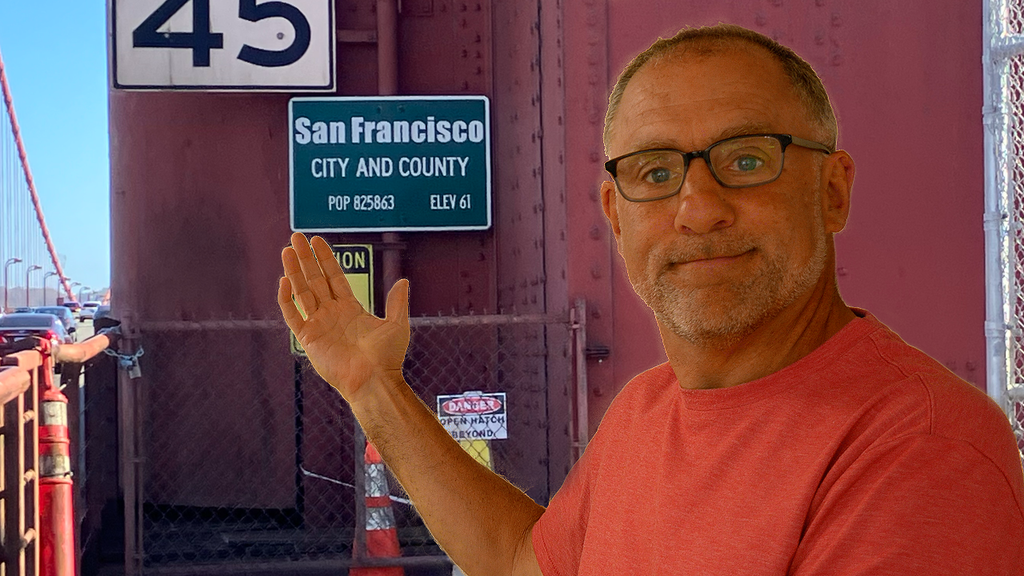
We invest a lot of meaning into names, a whole raft of emotional baggage that becomes a shorthand for how we feel about something, and how it interacts with our lives.
Today, I’d like to discuss one particular name. One which almost certainly carries meaning to you if you’re reading this.
San Francisco.
If I tell you I’m from San Francisco or that I’m a San Franciscan, it doubtless conjures some kind of reaction within you. Perhaps you immediately think I’m a loony lefty socialist. Or a crazy hippie. Maybe you think of a land of golden… or silicon… opportunities. Perhaps you simply guess — correctly — that I’m among one of the lucky few who get to call this city home.
But whatever image San Francisco conjures for you, the name itself serves as a shorthand for all that meaning. So for today’s story, let’s talk about the name San Francisco.
Native names
Before Europeans arrived, San Francisco Bay was known by the Chochenyo Ohlone as ommu.
What they called the area where the city now stands isn’t entirely clear. Today, we refer to the people who once lived here as Ramaytush, but this wasn’t the name they called themselves. Ramaytush comes from Chochenyo, from “rámai” meaning “western” and “tush”, “people.”
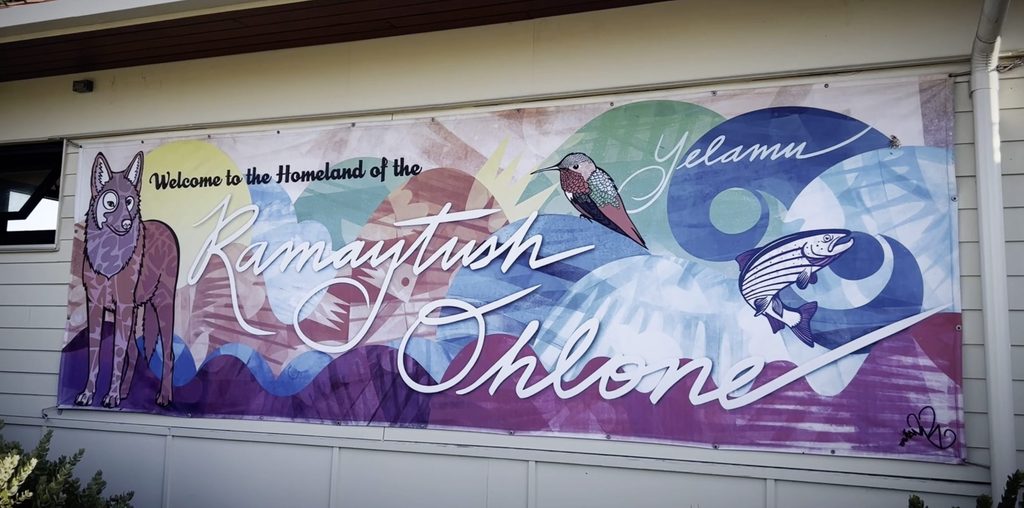
You might also hear the term Yelamu. This name shows up in records from Mission Dolores Church, but it’s believed that this refers to a specific village, rather than the area or the people.
The Ramaytush Ohlone had no written language, and the people didn’t fare well under the Spanish, the Mexicans, or the Americans, so we may never have a clear understanding of the names that those early inhabitants used to refer to the area.
The original San Francisco Bay
As for the name San Francisco, this begins — strangely enough — north of the bay, near Point Reyes.
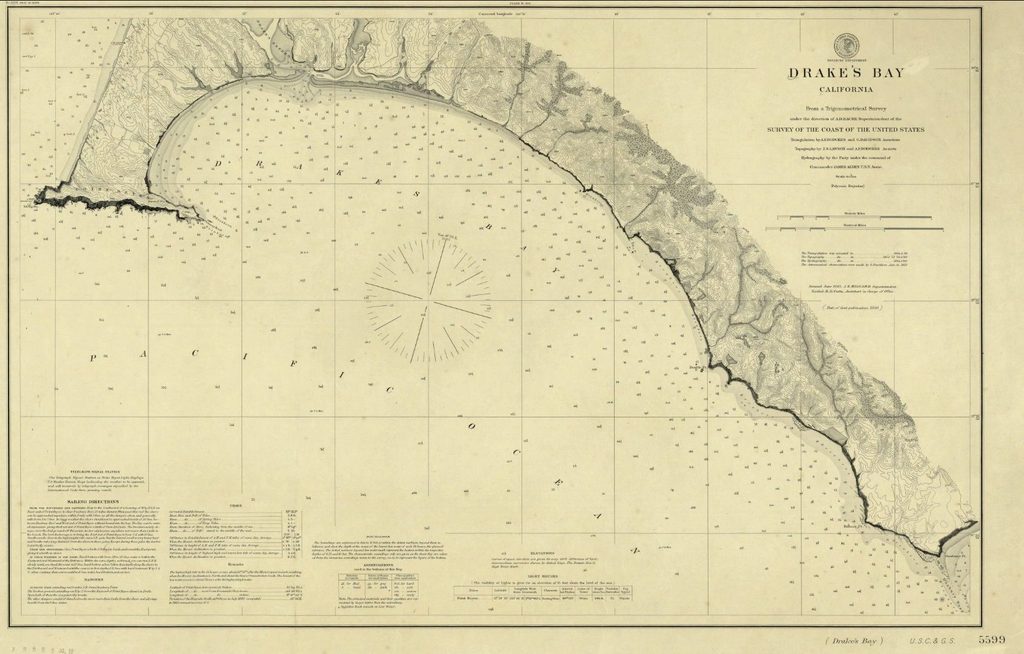
A.D. Bache et al., 1860
Via Davidrumsey.com
In 1595, the Spanish galleon San Agustin, commanded by the Portuguese captain Sebastião Rodrigues Soromenho, landed at roughly the same spot where Sir Frances Drake had arrived some 16 years before: what we now call Drakes Bay. The story of that voyage, of the meeting with the locals and the wreck of the San Agustin, might be worth telling on its own, but what matters for this story is that it was Soromenho and his crew who named that bay Bahia de San Francisco, San Francisco Bay, presumably after Saint Francis of Assisi, the founder of the Franciscan Order.
For various reasons — which I went into in a prior post — it took the Spanish a long time to get back into this area. Not until 1769, 174 years later, did a land expedition led by Gaspar de Portola bring Europeans to settle here.
Mistaken identity
When Portola and his men saw San Francisco Bay from the summit of Sweeny Ridge, they misidentified it. Maps of the area were vague, and what little they had to go on was nearly two centuries old.
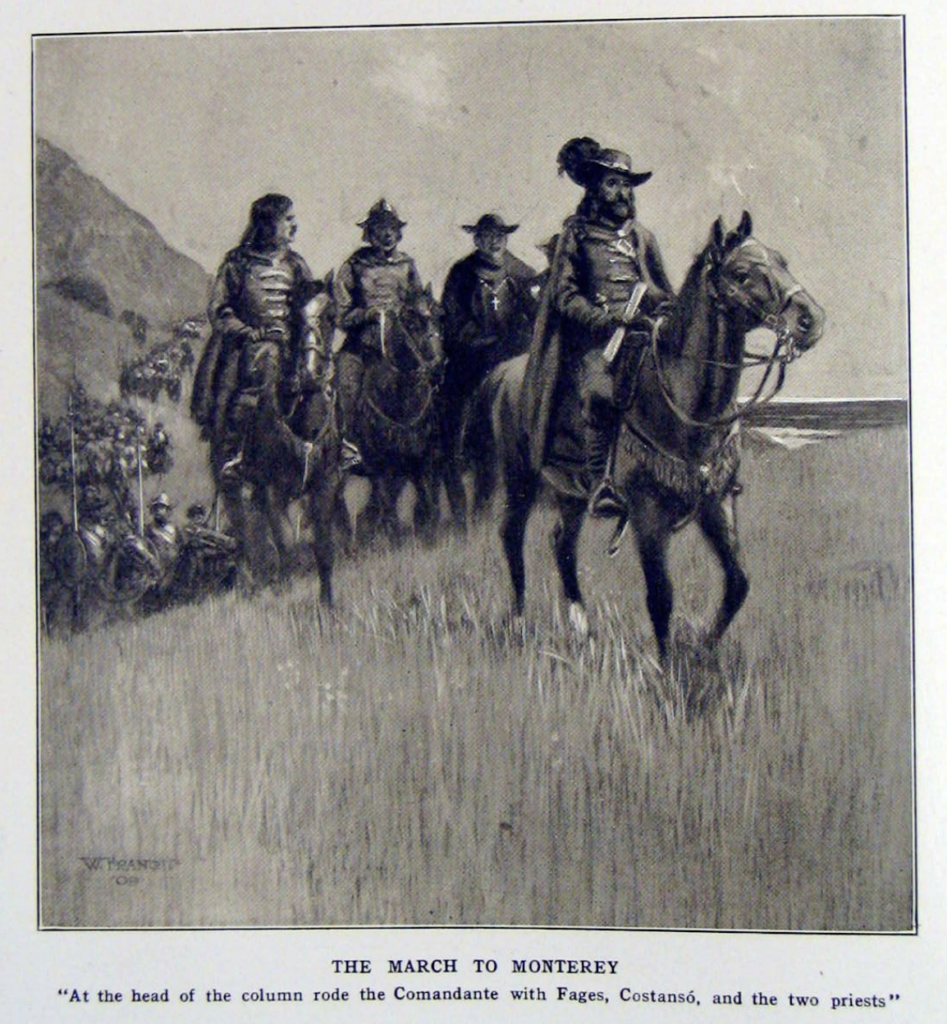
William Francis, 1909
from The March of Portola and the Log of the San Carlos by E. J. Molera
Thinking they had stumbled upon an undiscovered inlet of Bahia de San Francisco, Father Pedro Font, the expedition’s official diarist, drew his own map using that name.
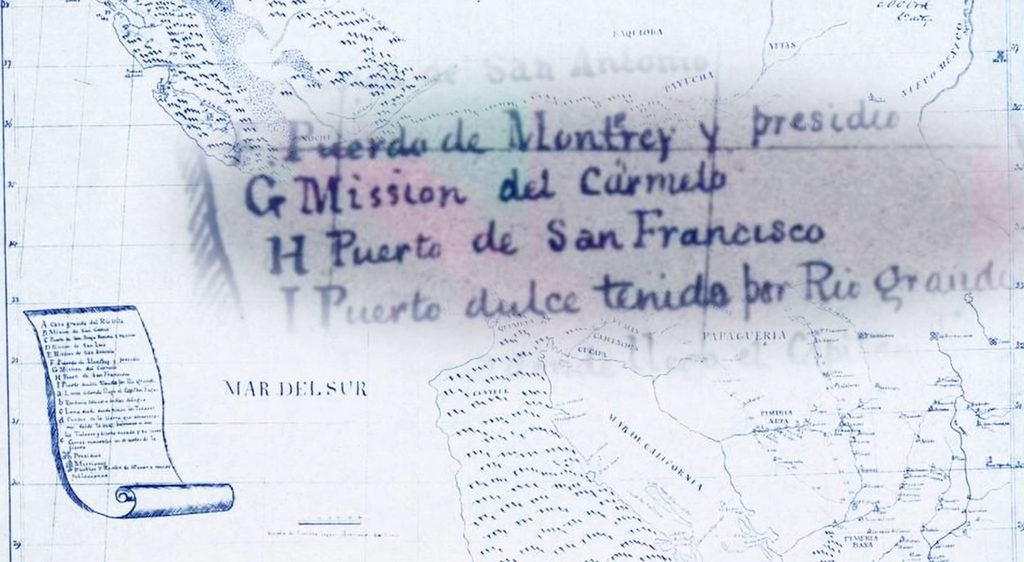
Fr. Pedro Font, 1777
Via USC Digital Library
Thus, for a time, there were effectively two San Francisco Bays: the one we know…and one further to the north. In the end, the larger and historically more important of the two kept the name which we’ve been using ever since.
Yerba Buena
But what about the city itself? It’s true that the Spanish called the bay San Francisco. And so the Presidio was called Presidio de San Francisco. And Mission Dolores was originally Mission de San Francisco de Asís.
But the settlement itself, founded in 1834, grew up far enough from both the Presidio and the Mission to be considered administratively separate. It had its own name, taken from its location at Yerba Buena Cove. In Spanish, the location was in fact called El Paraje de Yerba Buena, “The Place of the Good Herb.”
And…no…it’s not the herb you’re thinking of.
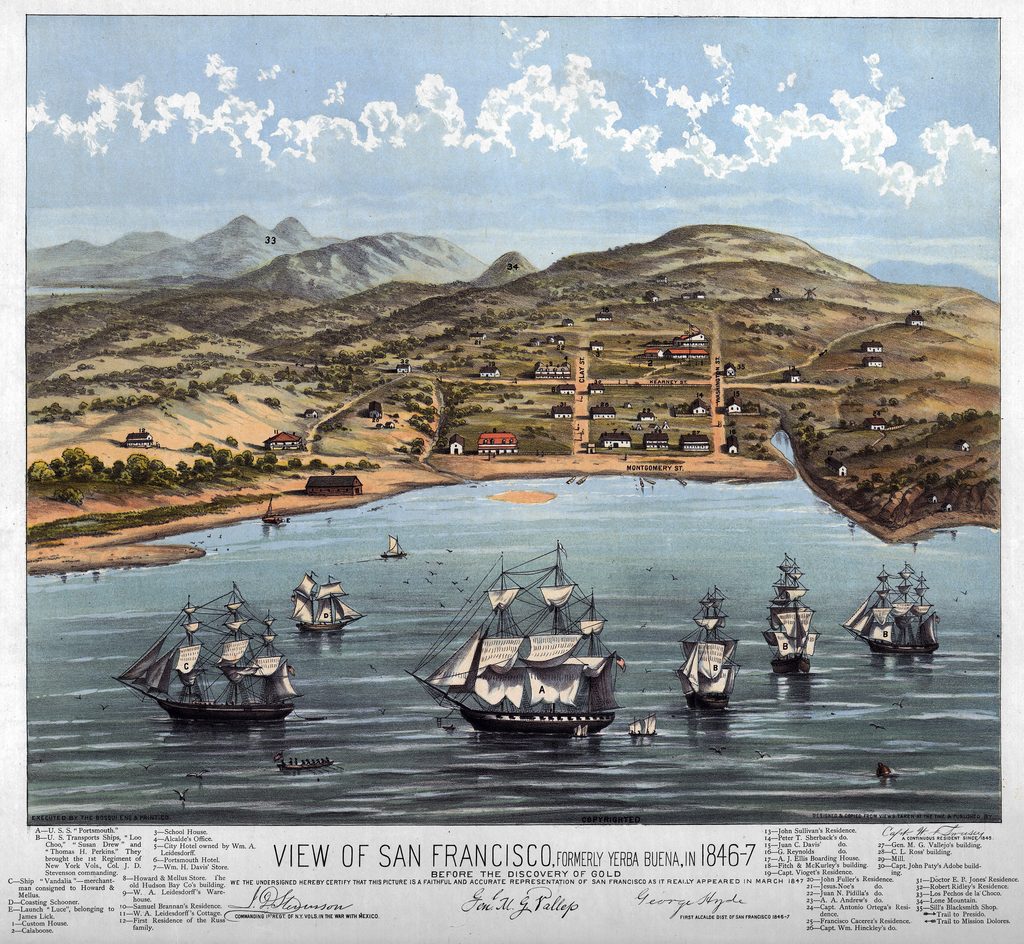
View of San Francisco, 1846-7

Captain William F. Sawsey, circa 1884
Via Wikimedia
Yerba Buena referred to a species of mint, Clinopodium douglasii, that once grew plentifully in that area, a mint you can still find around San Francisco in places like Mount Davidson. The Ohlone used Yerba Buena as both beverage and medicine.
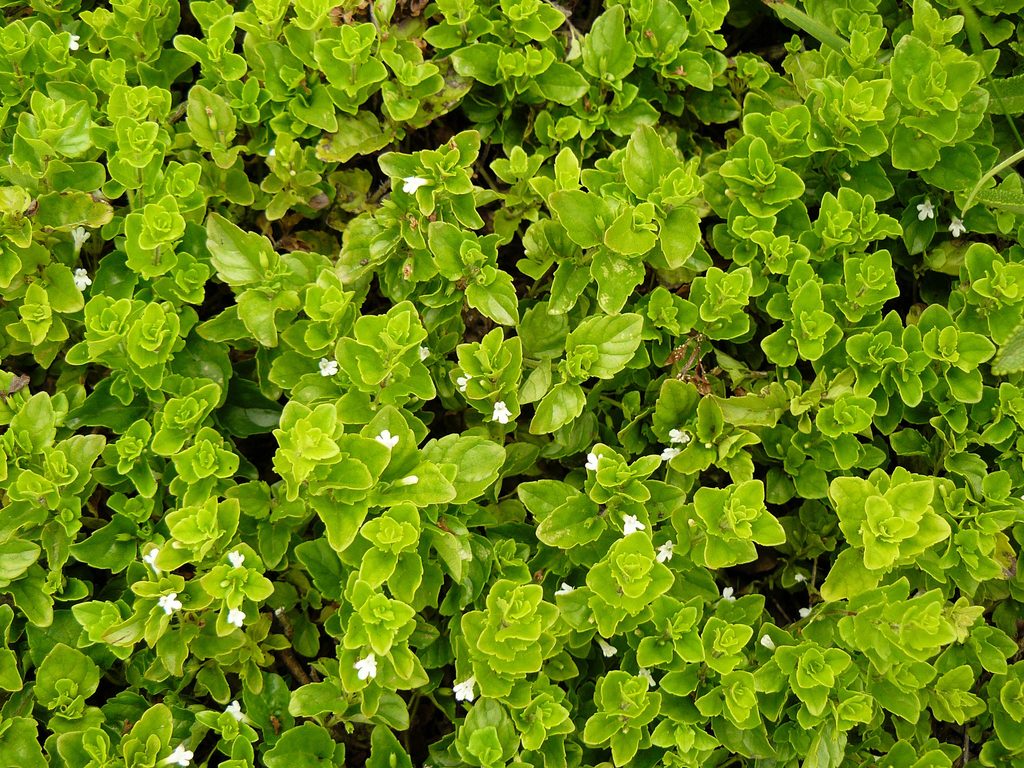

Joyce Cory, 2011
Via Wikimedia
So this tiny town was known as Yerba Buena until change came in a big way in 1846.
American takeover
In April of that year, President James K. Polk pushed the United States into war with Mexico in order to claim the southernmost part of Texas, along with a lot of other territory, including what was then called Alta California. Americans living in the area had begun the Bear Flag Revolt, declaring an independent California Republic. They seized Yerba Buena, raising their flag at the town square on July 2, 1846.
Simultaneously, the U.S. dispatched a ship, the U.S.S. Portsmouth (after which today’s Portsmouth Square is named). The Portsmouth landed Commander John Montgomery, together with 70 sailors and marines at Yerba Buena on July 9, who marched to the square and raised the American flag.
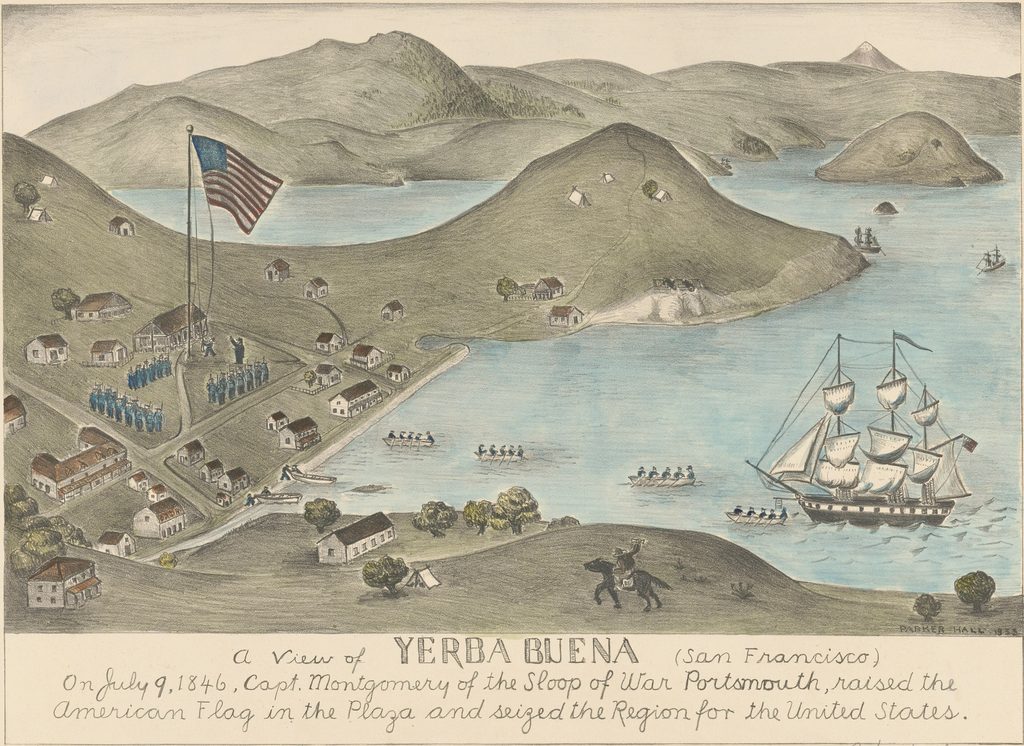
._On_July_9,_1846,_Capt._Montgomery_of_the_Sloop_of_War_Portsmouth,_raised_the_American_Flag_in_the_plaza_and_seized_the_region_of_the_United_States_LCCN2004666425.jpg)
Parker Hall, 1933
Via Wikimedia
And what does any of this have to do with the name?
Well, after U.S. forces took over, Montgomery appointed two men to run the city as alcaldes or mayors: Mexican José de Jesús Noé alongside American Washington Allon Bartlett. And in one of his first acts as alcalde, Bartlett decided it was time for the town to reflect the name of the bay and region. The name already known internationally. Thus on January 30, 1847, the village of Yerba Buena officially became the town of San Francisco.
Francisca Benicia
As a fun side note. At the same time, Mariano Vallejo was planning a new town across the bay which he wanted to name Francisca, after his wife Francisca Benicia Carillo. After Bartlett’s declaration, however, Vallejo settled instead on his wife’s middle name, and thus we now have the city of Benicia.
Don’t call it “Frisco”
So when you come to San Francisco, you’ll know all the twists and turns it took to get to its present name.
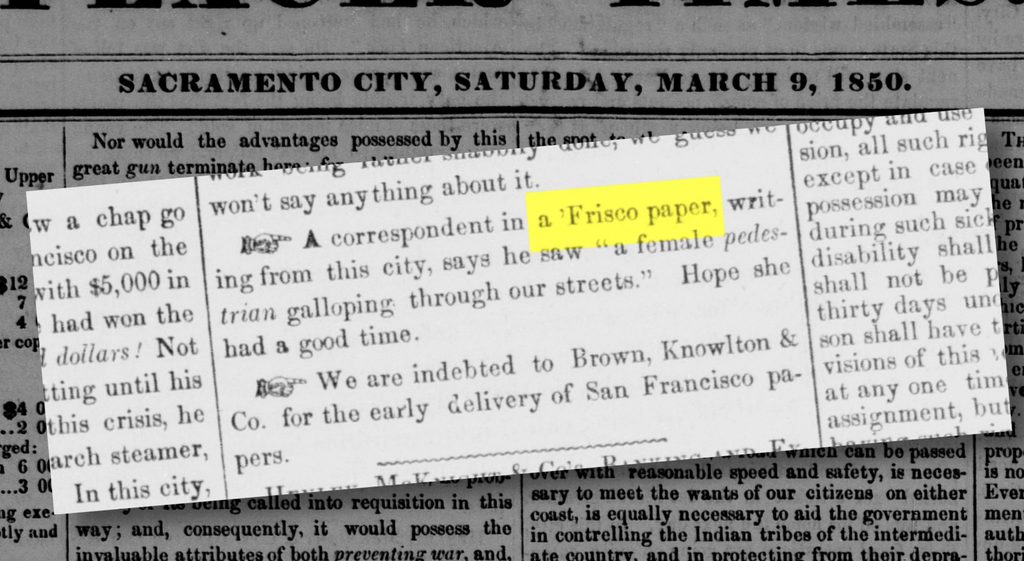
And you should also know folks here don’t appreciate you calling it “Frisco,” though between you and me that nickname can be found in local newspapers at least as far back as 1850…so notwithstanding the local distaste for the term, it’s got historical street cred.
Anyway, you can call it SF, Baghdad by the Bay, Fog City, Paris of the West, Golden City, or just my City by the Bay. Or maybe the name doesn’t really matter. What matters is the feeling you get when you hear it spoken.
Ommu. Ramaytush. Yelamu. Yerba Buena. San Francisco.
Is there a San Francisco story you’d like me to tell? Or one you’d like to tell yourself? Let me know about it in the comments!
Leave a Reply