When genius tipped into horror
Extract a moment in time and an object becomes visible in a new way. You might better understand something of how that object moves, how it behaves, even how it thinks.
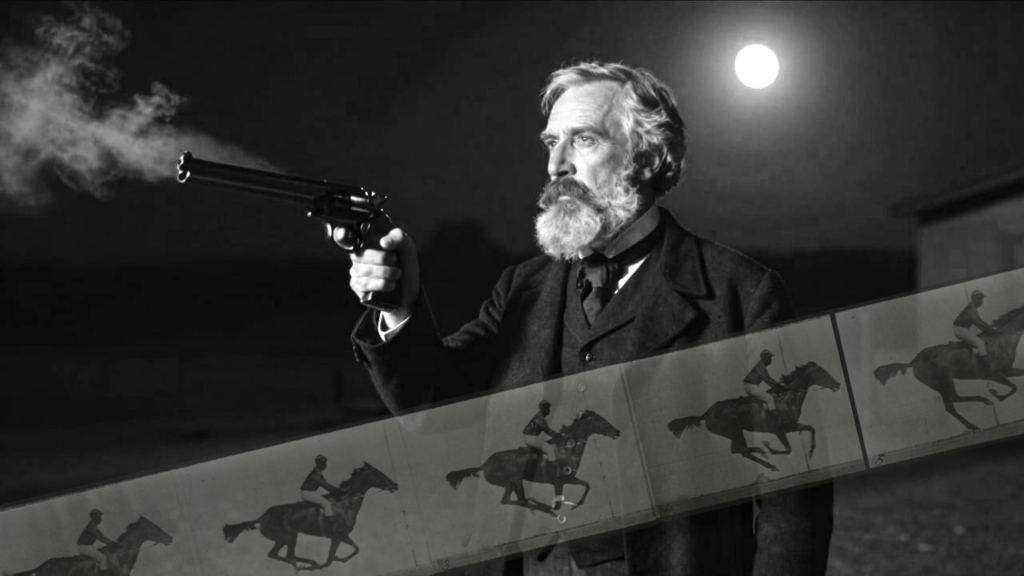
In the 19th century in and around San Francisco, Eadweard Muybridge captured and distilled time in a way no one before him had done. In so doing, he advanced the technology of photography. In many ways, his work prefigured and brought about that of movies. He even improved our understanding of how living creatures work.
And of course there’s a good story in that. But that’s not the story I’m going to tell today. I’m going to extract a moment in Muybridge‘s life, a particular incident when genius tipped into horror. And in it, I’ll ask the question, does this moment reveal the truth of Eadweard Muybridge, or does it simply show us one frame of a more complicated personality?
Does the moment make the man…or is it the man who makes the moment?
Muybridge’s early life
When Edward Muybridge came to San Francisco in 1855, it was a world where intrepid individuals could build empires. Men like James Lick, Domingo Ghirardelli, and Leland Stanford were making fortunes for themselves in a city where fifty thousand people crowded into a tiny area bounded by Larkin Street to the west and water to the north, south, and east.
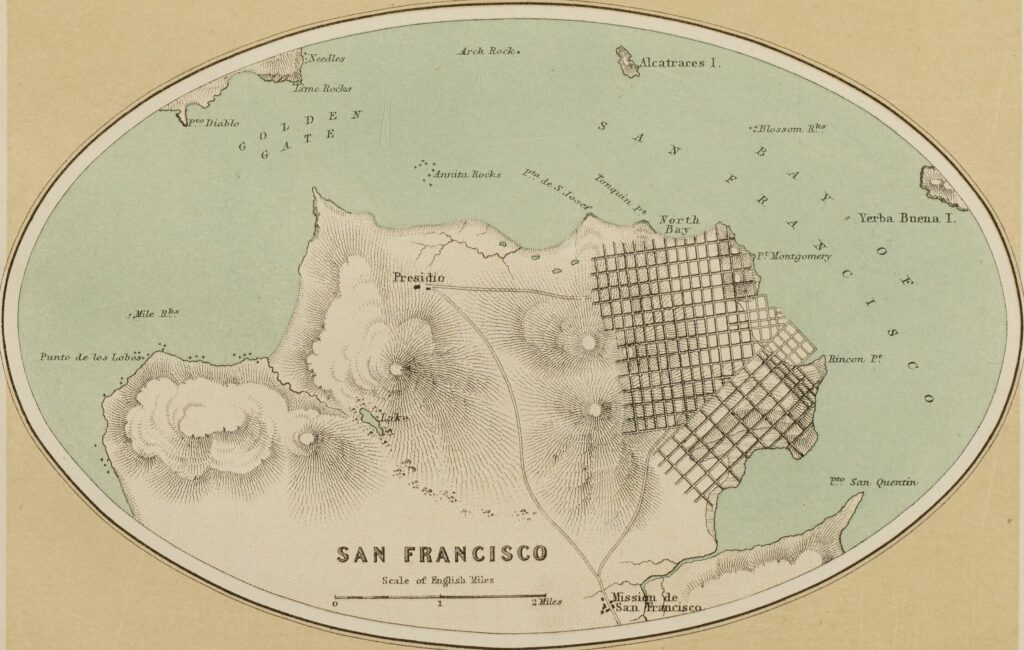
Henry Darwin Rogers and Alexander Keith Johnston, 1857
(via wikimedia)
Born Edward Muggeridge in Kingston-upon-Thames, England, he departed for America at the age of 20. On leaving England his grandmother offered him money, to which he replied, “No, thank you Grandma, I’m going to make a name for myself. If I fail, you will never hear of me again.”
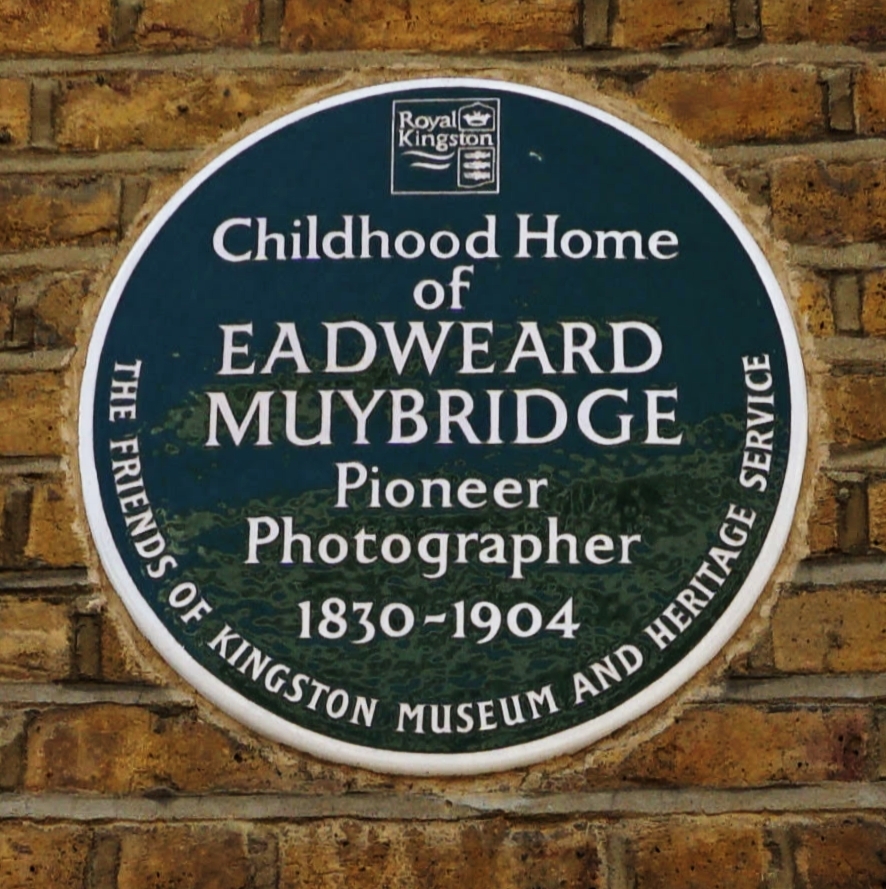
(via LondonRemebers.com)
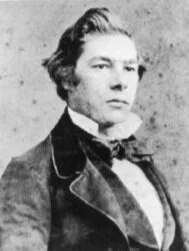
(via wicaonline.org)
He did indeed make a name for himself. In fact, he changed his name several times over the course of his life.
His proud declaration to his grandmother may have been a bit overstated…or perhaps it’s just a legend…because he returned to England in 1861 — just six years later — to study photography. And it was this pivot of career that brought Muybridge the name he so clearly desired.
San Francisco, Flora & Stanford
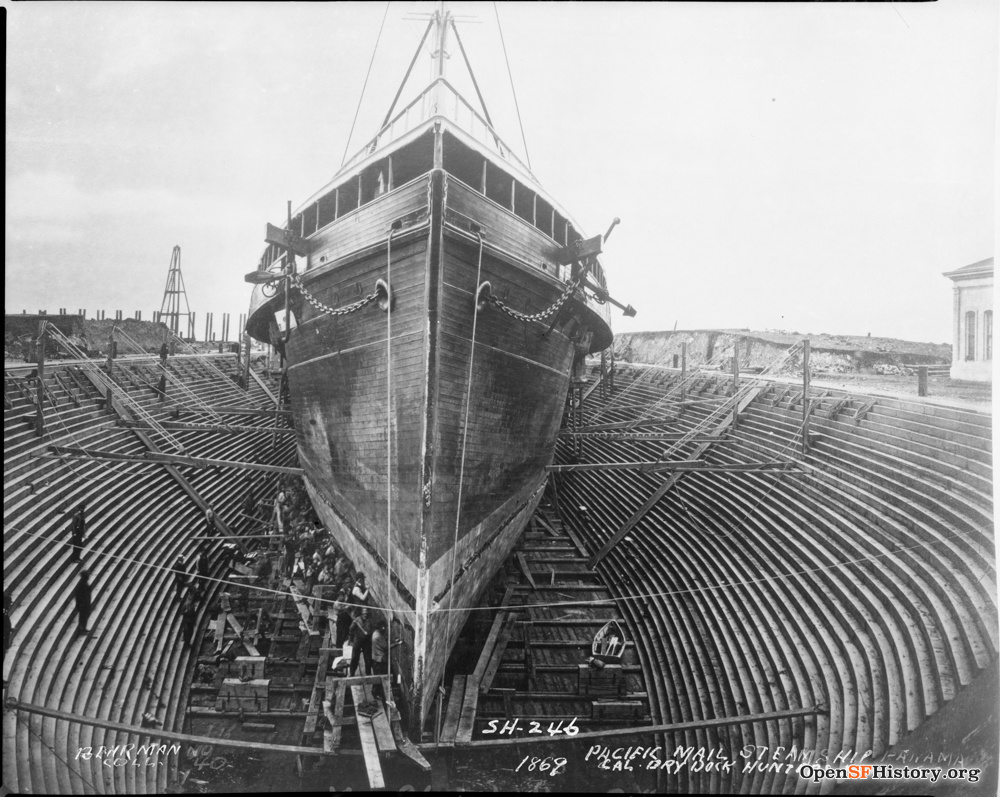
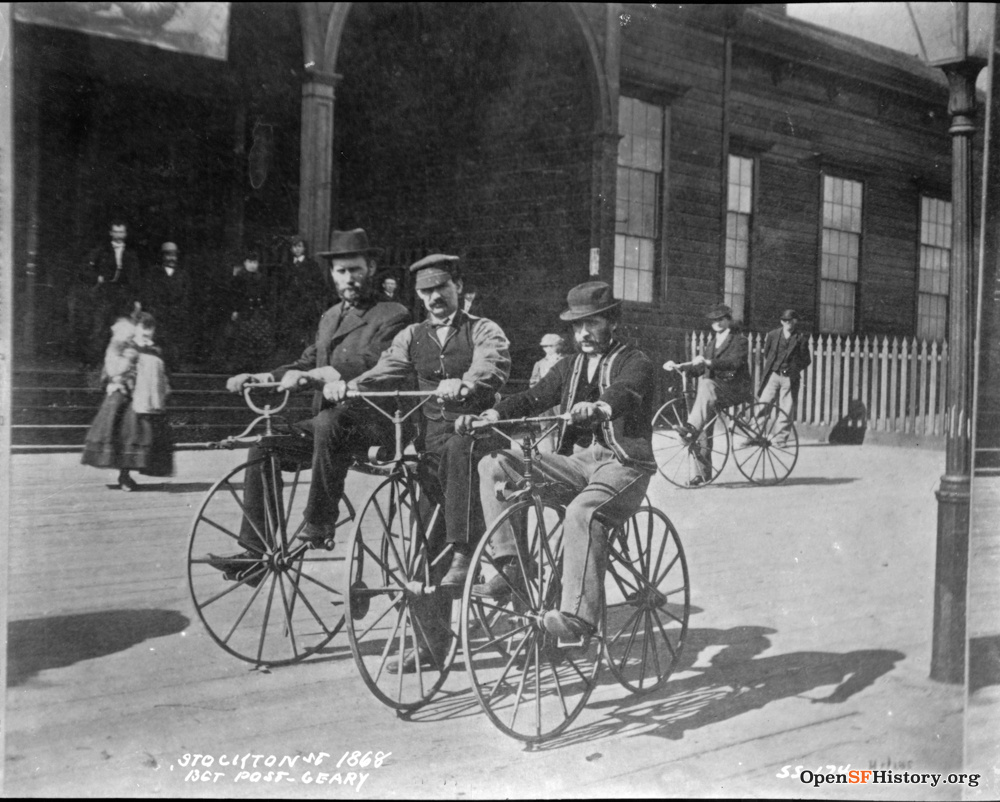
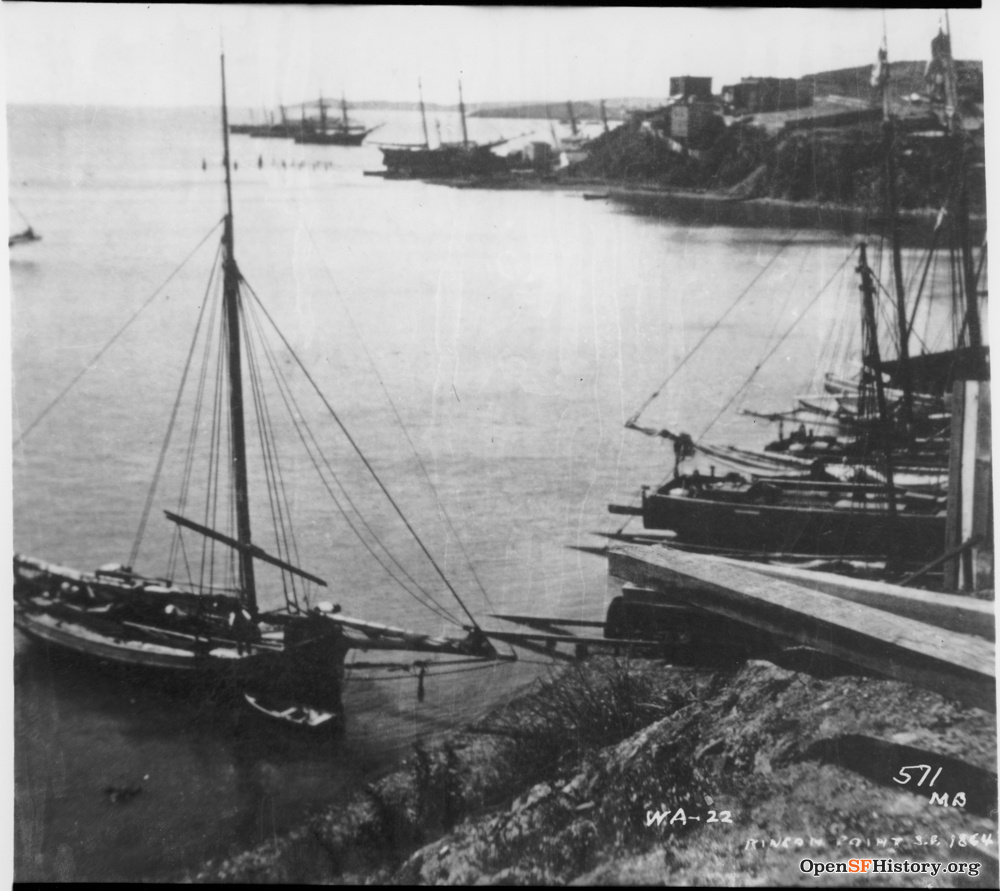
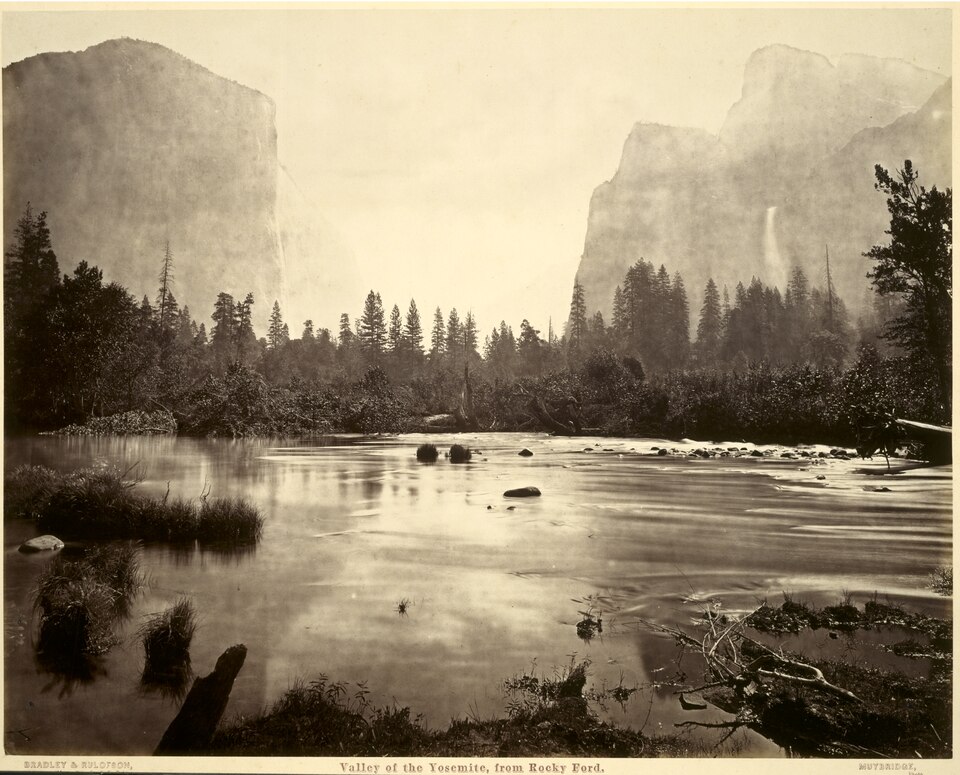
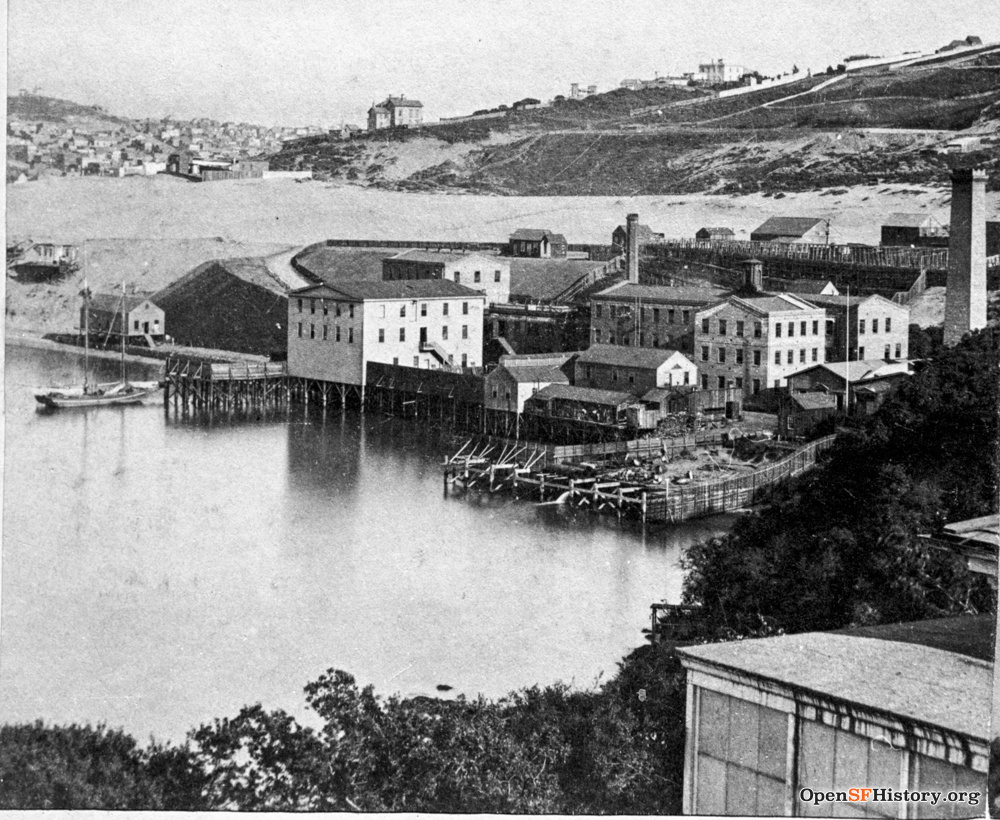
In 1866, he returned to San Francisco, setting up a photography studio at 415 Montgomery Street. In the years that followed, he built a successful business photographing landscapes and buildings.
OpenSFHistory / wnp71.1999
OpenSFHistory / wnp71.2171
(via wikimedia)
OpenSFHistory / wnp37.02357
By 1867, he was publishing photos under the name Eadweard Muybridge aka “Helios” invoking both the ancient name of an English king and the Greek god of the sun.
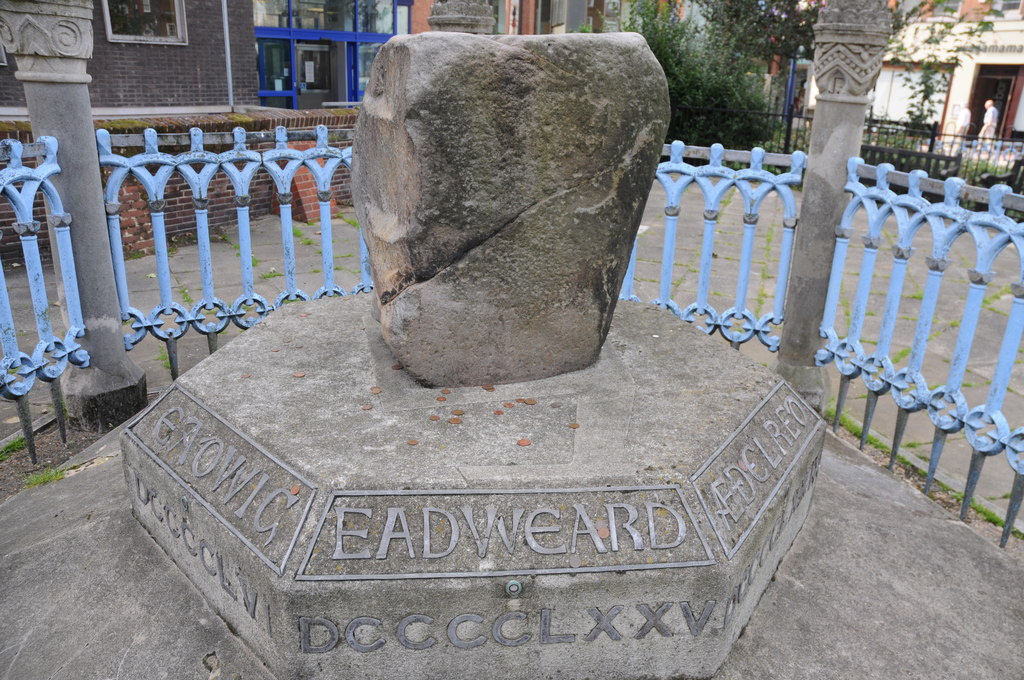
Photo by Philip Halling, 2011 (via wikimedia)
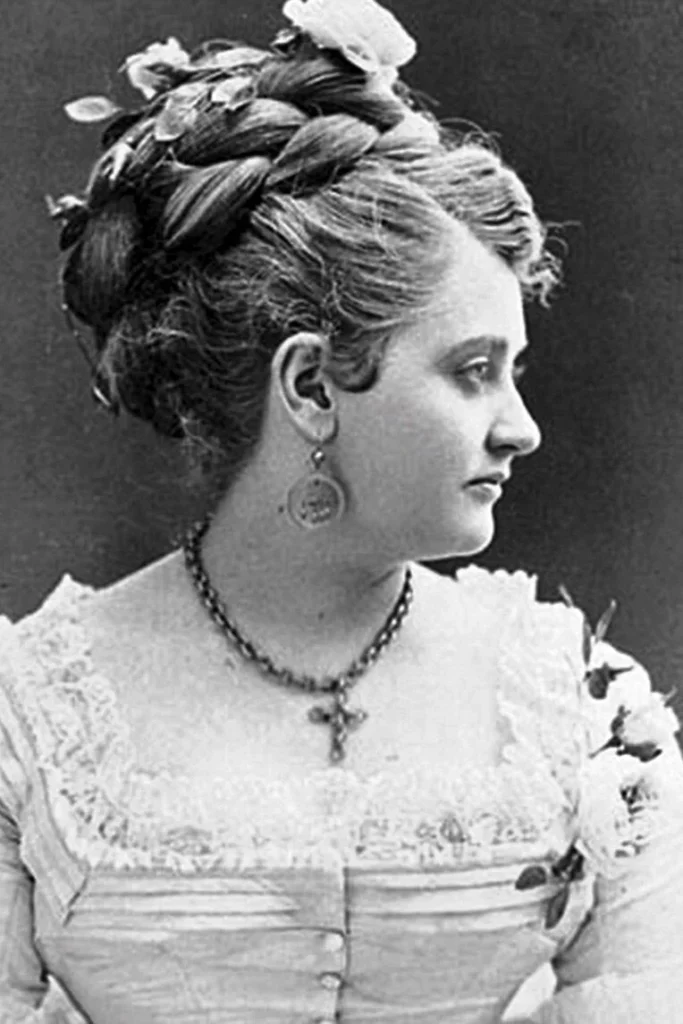
Then in 1871, at 41 years old, he met and married 21-year-old Flora Stone. Like Muybridge, Stone had had several names. Born in the mid-west as Flora Downs, she had adopted her foster father’s name of Shallcross before taking her husband’s surname. Her marriage to Lucius Stone was not a happy one, and Muybridge assisted her in divorce proceedings on the grounds of cruelty.
(Via wicaonline.org)
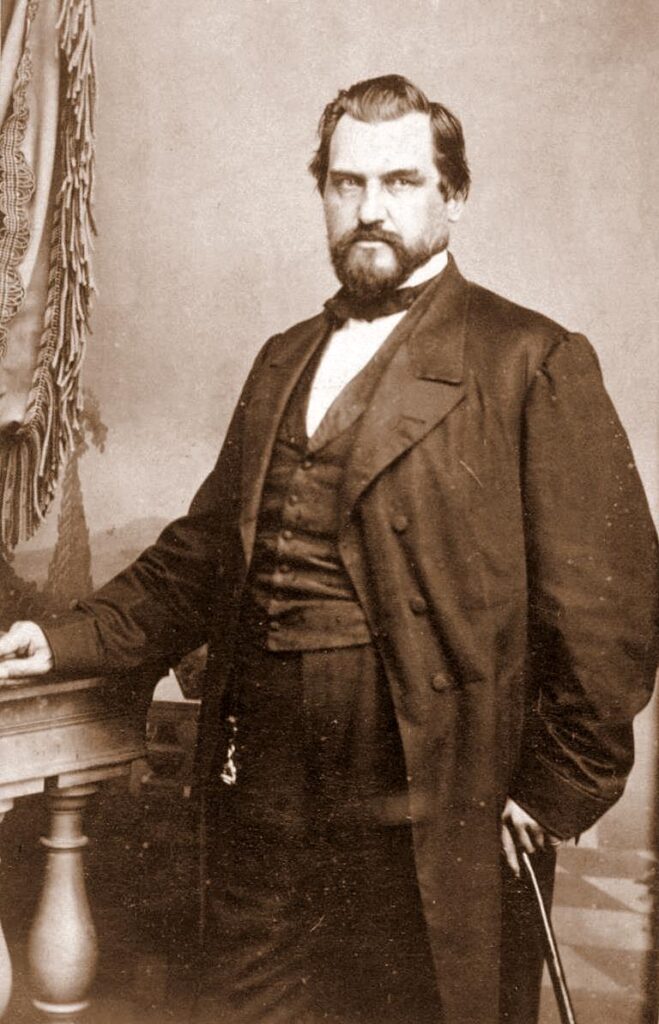
It was in the following year, 1872, that Muybridge came to the attention of former California governor Leland Stanford, who hired him to photograph his home.
(Author unknown, via wikimedia)
According to legend (a legend with no documentary foundation) Stanford asked Muybridge to help him settle a bet. When a horse gallops, Stanford asked, do all four hooves ever simultaneously leave the ground? He hoped that Muybridge could capture a photograph to settle the question once and for all.
If our story were principally about this aspect of Muybridge’s life, we could delve into the many technical challenges, or the equally daunting challenge of keeping his wealthy patron engaged over the years it took to overcome those hurdles, or even into the clashes between these larger-than-life personalities.
A year later, Muybridge managed to snap a blurry photograph of sufficient quality to keep Stanford funding his experiments for years to come.
Enter Larkyns
But the incident we’re pulling into focus occurred soon thereafter.
It took little time for strain to appear in Flora’s second marriage. While Muybridge later testified they had little acrimony as a couple, he spent large amounts of time away from home on his photographic expeditions, and even when present seemed to share little in the way of common interests with his new wife.
Sometime in 1872 or 1873, Flora met Major Harry Larkyns. Handsome, debonair, an Englishman like Muybridge, Larkyns is said to have fought in Italy with Garibaldi, administered a government in India, and joined the French in their war against the Prussians, gaining the rank of major and supposedly earning the French Legion of Honor. Despite these glorious accolades, it’s possible that in reality he was little more than a common swindler, for he was also briefly jailed in Salt Lake City, having scammed a local man out of $3000.
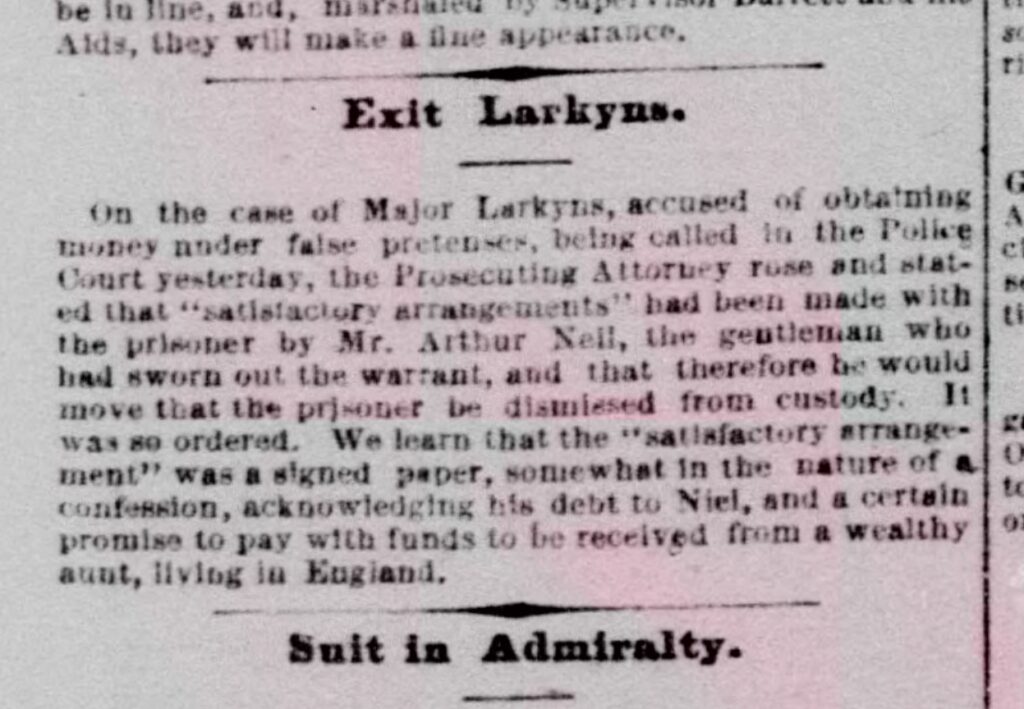
Larkyns loved the theater and writing, pursuits which appealed to Flora. Eadweard being distant in both person and persona left her ample free time, and she began spending more and more of it…and more and more of her money…with Larkyns.
Flora became pregnant three times, the first two of these resulting in stillbirths. But in April, 1874, she at last gave birth to a baby boy, Florado Helios Muybridge, the middle name being one of Eadweard Muybridge’s own adopted names.
Eadweard himself was, predictably, out of town at the time.
The murder
There’s something poetic in the fact that a photo marked the end of Muybridge’s marriage. On October 17, 1874, when Florado was six months old, Flora’s nurse showed Eadweard a photograph of the baby, one which Muybridge had never seen. On the back, in handwriting which he recognized, Flora had written “Little Harry!”
According to multiple witnesses, this discovery aroused a little-seen passion in the otherwise cold and distant Muybridge. The idea of having been cuckolded seemed to overwhelm him, striking not merely his male pride, but at his notion of being something more than common.
At that time, Harry Larkyns had left San Francisco to write for a newspaper, “The Daily Stock Report” near Calistoga.
That afternoon, after setting certain affairs in order, Muybridge took a ferry from San Francisco to Vallejo and then a train to Calistoga.
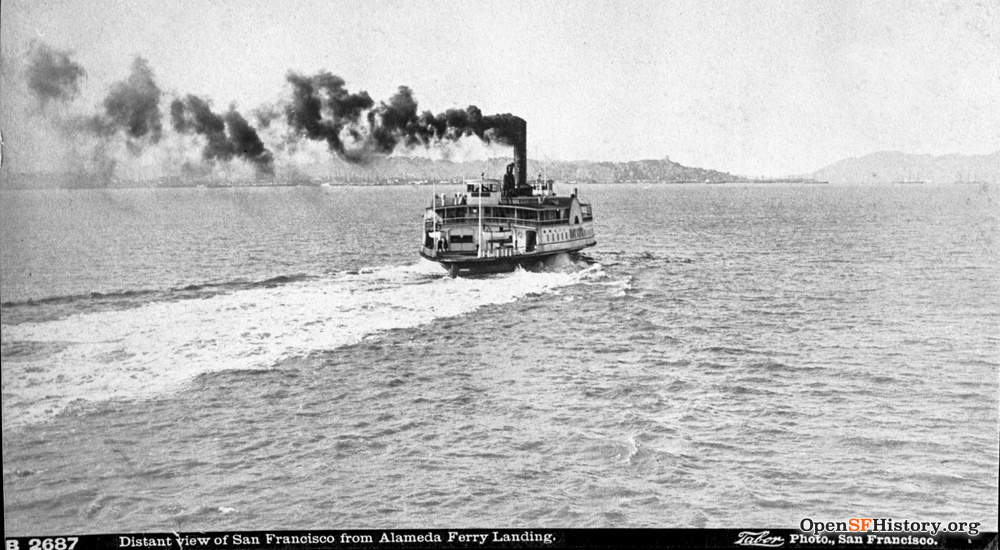
OpenSFHistory / wnp37.01174
From Calistoga, deep into the October night, he hired a horse and buggy to where Larkyns was staying, a house at the Yellow Jacket mine near Mount St. Helena. The man who sought to capture instantaneous moments in time spent hour after hour on ferry, train and wagon, a pistol in his pocket, contemplating the moment he would confront his wife’s lover.
Along the final leg of the journey, he test-fired his pistol.
When they arrived near midnight, Harry Larkyns was deeply engaged in a lively game of cribbage. A knock on the door, and Larkyns was told that someone awaited him outside.
Unable to see into the darkness, Larkyns heard a voice: “I have brought you a message from my wife.”
Then a single gunshot rang out.
Larkyns ran back into the room, fleeing out the back door.
Muybridge was apprehended and disarmed. He apologized to the ladies present for disturbing their evening. And he admitted that his purpose had been to kill the Major, arriving at night in order to have the advantage over Larkyns in the darkness.
Shortly thereafter, witnesses found Larkyns, shot below the left nipple and dead beneath a tree.
The trial
A trial took place in Napa in February, 1875.
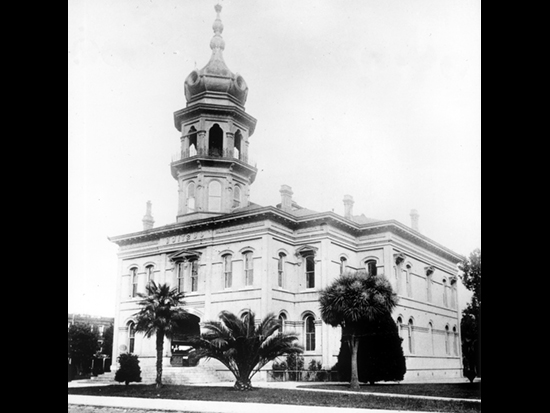
(via cschs.org)
The prosecution seemed to have a case forged of iron. They had the murder weapon, the victim’s body, a large group of witnesses, and the confession of the murderer himself. They called three witnesses who all confirmed the same story, that Muybridge had been found with the gun…the same gun which the driver of the buggy testified had been test-fired on the journey to the Yellow Jacket Mine. That Larkyns was unarmed. That Muybridge had admitted to the murder. Had admitted to planning it.
But Muybridge’s legal team, led by William W. Pendegast, a friend of Leland Stanford, mounted a bewildering, self-contradicting defense. Muybridge, they contended, was both insane at the time of the murder and justified in the homicide on the grounds that Flora and Harry Larkyns had committed adultery.
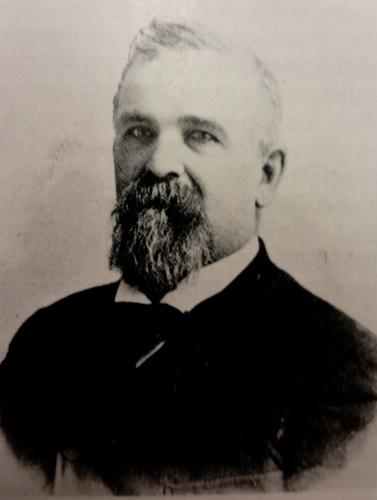
(via wikimedia)
Pendegast pointed to a stagecoach accident in Texas in 1860, where Muybridge had received a head injury. That accident, he alleged, had changed his personality. Several witnesses testified that Muybridge was forgetful, that his appearance and behavior had changed after the accident, that he dressed shabbily, had changed his name, that he wasn’t a good businessman — all apparently denoting a man deprived of his wits.
At the same time, Pendegast argued that Muybridge had only done what any proud, rational man would do in defending his honor. In his summation, the lawyer — orating in lyrical terms for two hours — actually refuted his own insanity defense, begging the jury either to find his client not guilty or to send him to the gallows.
“Larkyns was but one of a class, and that class, in seducing a man’s wife, make a dreadful gamble. They stake their lives against moments of sensual gratification. He had played and lost, and had to pay the penalty.”
“Law or no law, every fiber of a man’s frame impels him to instant vengeance, and he will have it, if hell yawned before him the instant afterward.”
The prosecutor and the judge both instructed the jury that a man must be proven insane in order to be found innocent by reason of insanity. Failing that, the jury could not acquit him solely because he and his lawyers argued that he believed in the rightness of his cause.
The verdict
It was midnight when the jury of twelve men was sent off to deliberate, and they returned a verdict twelve hours later.
They dismissed the defense argument that Muybridge was innocent by reason of insanity. Nevertheless, they declare him not guilty of murder.
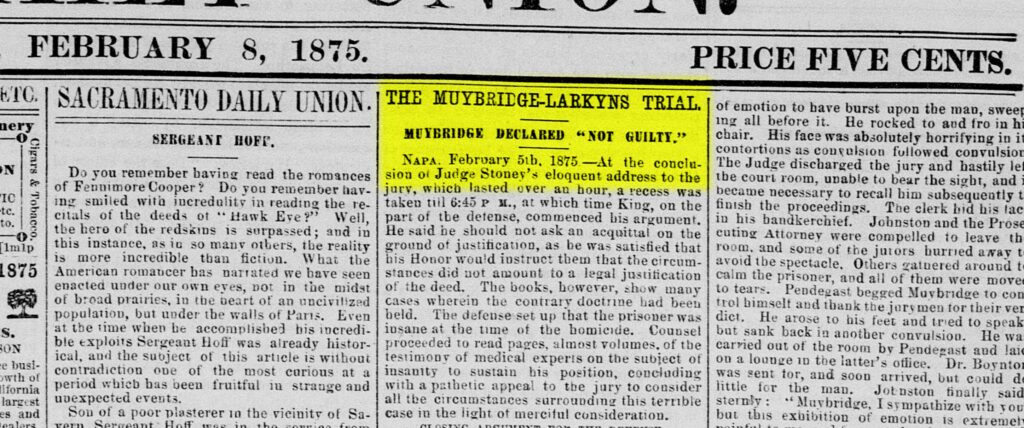
While the ruling was directly ignored their instructions, one was quoted as saying,
“…if their verdict was not in accord with the law of the books, it is with the law of human nature; that, in short, under similar circumstances they would have done as Muybridge did.”
On hearing the verdict, Muybridge gasped, falling into Pendegast’s lap, crying like a baby. The judge, prosecutors and jury all left the chamber to avoid the unseemly spectacle.
Then, in a flash, the episode was over. Muybridge straightened up, the proceedings concluded, and he was released. By evening, he was back in San Francisco enjoying a dinner party with friends.
Aftermath
Public opinion — at least insofar as it was reported by local newspapers — largely agreed with that of the jury. Surely, no man could be blamed for slaying another man who had offended him to such a degree! As to Flora’s responsibility for the matter, few papers seemed to consider her perspective, other than as either a wanton woman or a much-harmed innocent.
Despite Muybridge’s claims, repeated throughout and after the trial, that he loved Flora more than life itself, that he pitied her more than he blamed her, that she would never know want as long as Muybridge had means to earn money, they separated. The court denied her request for a divorce in the December before the trial. The following April the same judge reversed himself, allowing Flora $50/month in alimony.
But Muybridge, perhaps predictably, was away. Almost immediately after the trial, he left on a previously-planned photographic tour in Central America. Helios, the god who stood above the cares of mortal men, flew away once more.
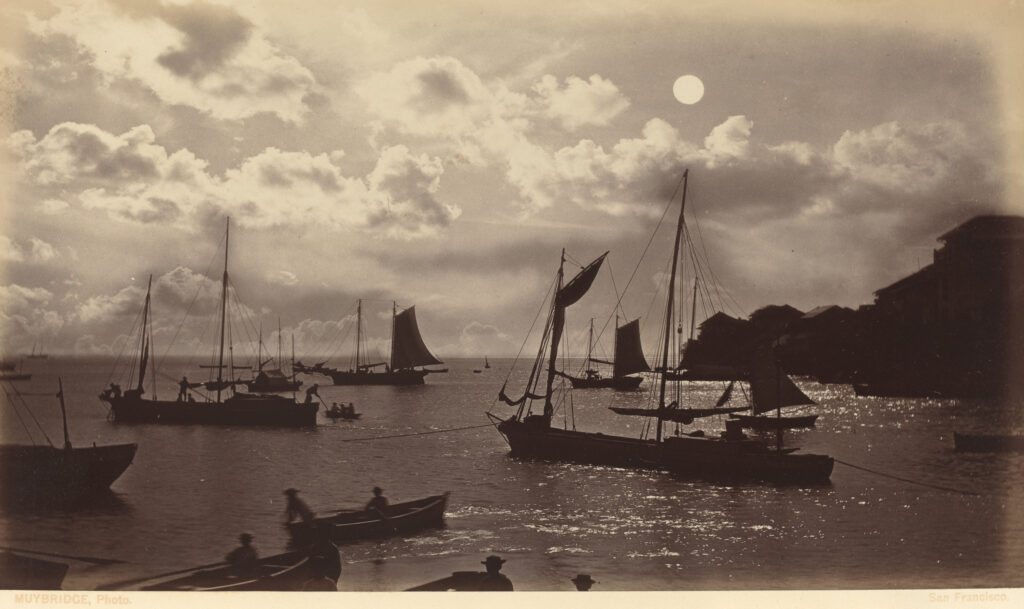
(via wikimedia)
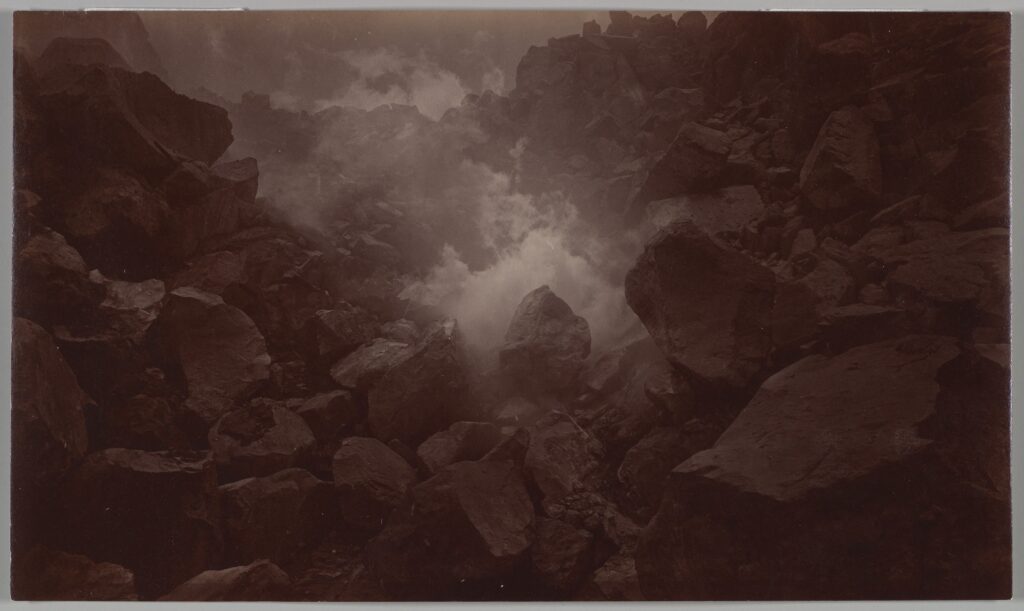
(via wikimedia)
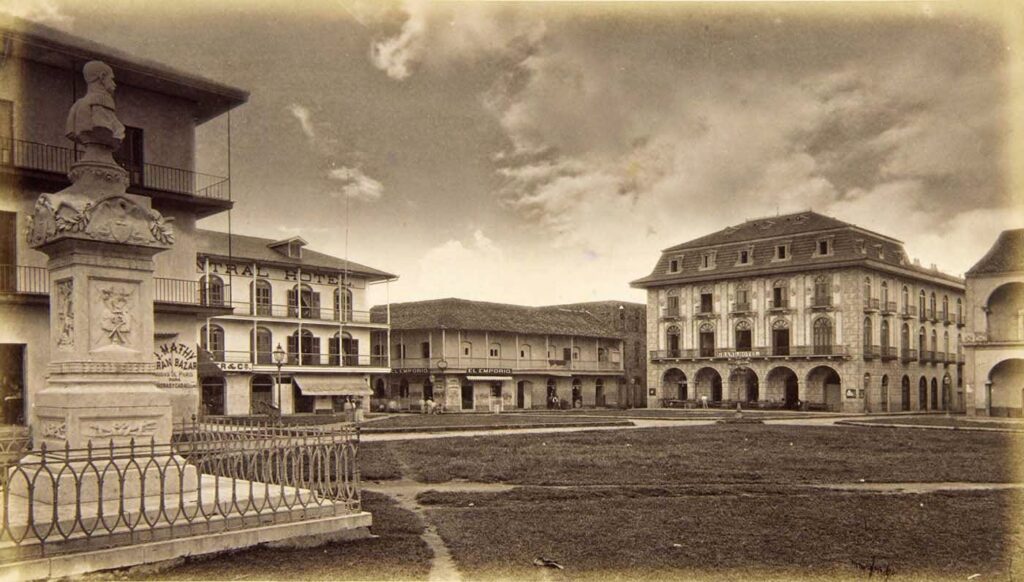
(via wikimedia)
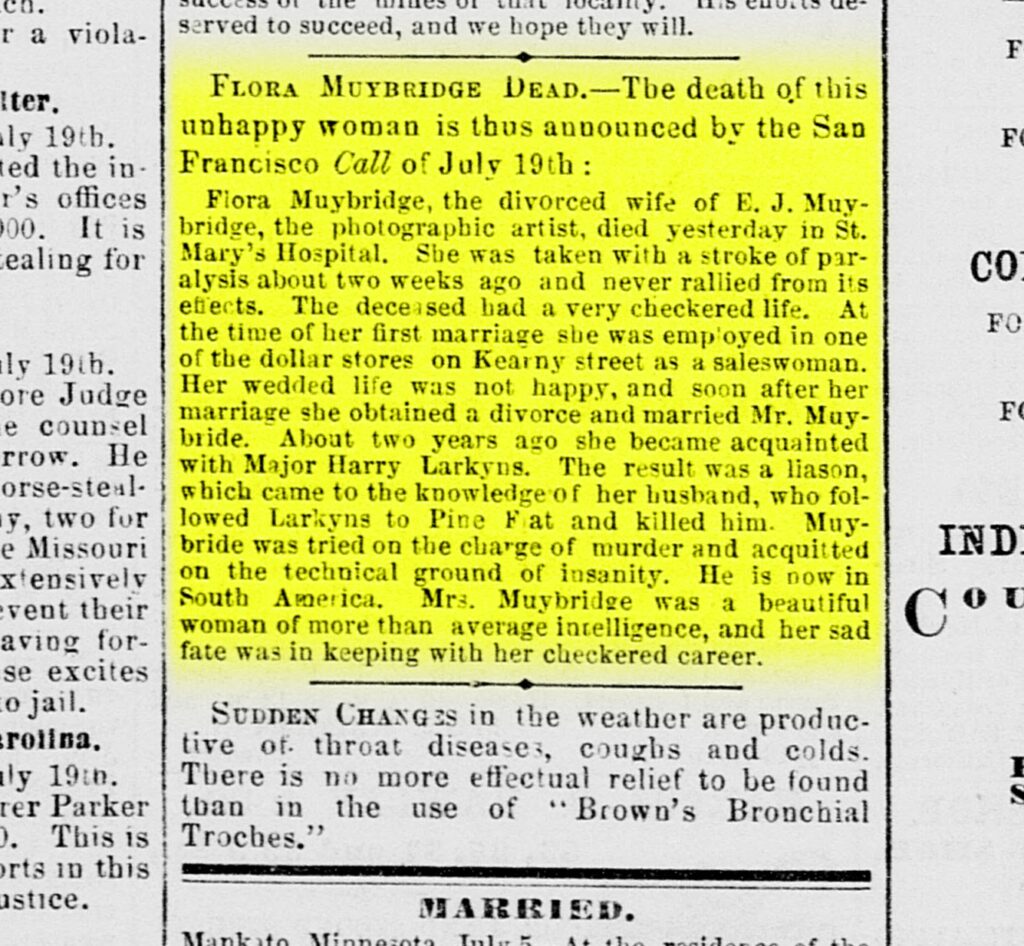
We’ll never know if Flora would have received the alimony she and her son had been granted. Just two months later, at the age of 24, Flora died. The newspapers simply called it “a stroke of paralysis from which she never recovered.”
As for Florado — or “Little Harry” — he was sent first to a catholic and then a protestant orphanage. As far as we know, Eadweard, denying his paternity, had little to do with him. He lived in California, dying in a car accident in 1944.
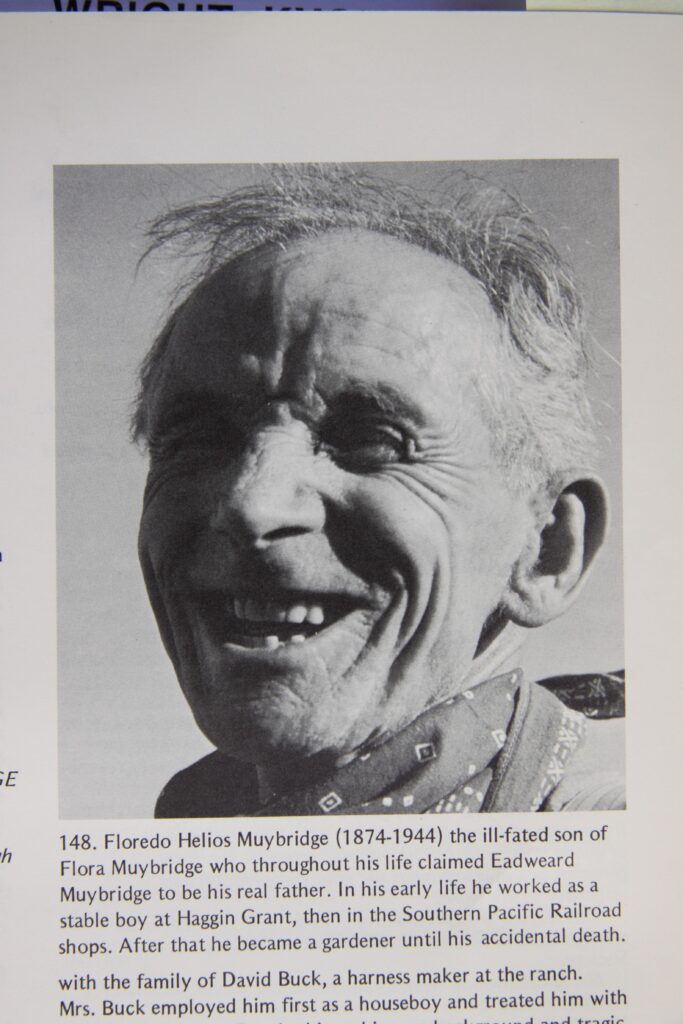
(via findagrave.com)
Beyond the moment in time
Of course Muybridge would go on to fame and fortune, completing his experiments with Leland Stanford and demonstrating how film could be used to capture moments in time. He survived until 1904, dying back in the town where he’d been born…his gravestone revealing one final name change.
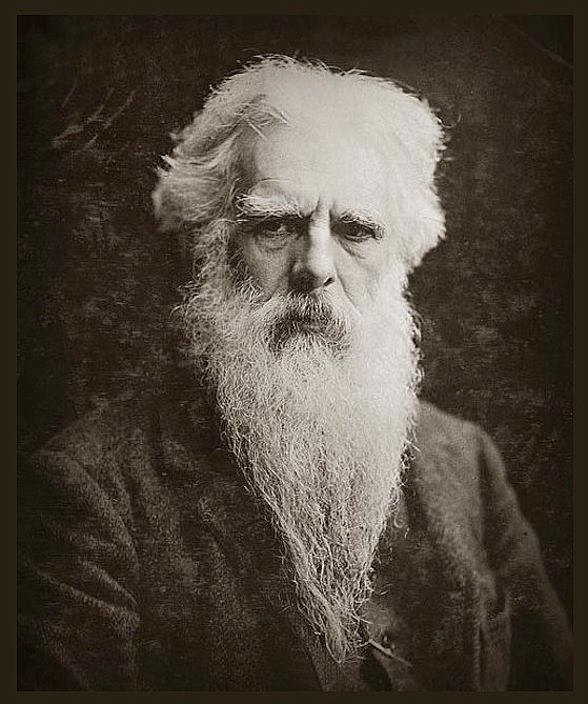
(via wikimedia)
There can be no denying that aspects of Muybridge’s life made him a person to remember, a pivotal figure in the history of photography. Even a person to admire. And perhaps Harry Larkyns and Flora had behaved badly in deceiving him rather than approaching the matter truthfully.
But to what extent was this entire moment in time the result of Eadweard’s myopic vision, his ego, the degree to which he ignored Flora’s needs and focused only on his own ambitions? The jury saw only the moment. They never saw Eadweard the king. Helios the God. The man who could see between the seconds.
I write about things which interest me, including San Francisco and the topic of writing itself. Please consider following me on my blog or on YouTube.
Leave a Reply