In today’s deliciously high-proof story, we explore one of San Francisco’s best and most elusive cocktails: the Pisco Punch.
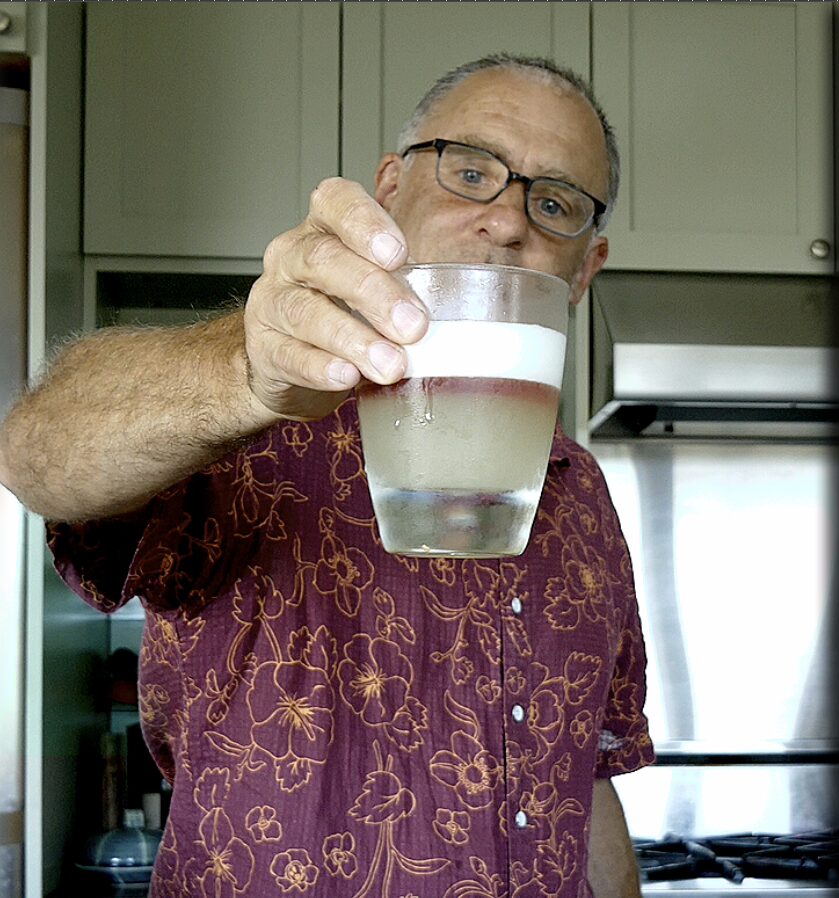
It’s a story of a newborn city, some mercurial characters, and one very mysterious secret ingredient.
Read on or watch the video below (which includes a demonstration of how to make four versions).
Blurry vision
As is often the case with alcohol-related histories, there’s considerable controversy around almost every aspect of the Pisco Punch story…from who created it, where that happened, and even what actually went in it.
It’s almost as if all the historical witnesses were hopped up on some intoxicating potion.
Anyway, just remember that I’m telling a story. The facts here are as elusive as a spritz of lemon juice scattered by the wingtips of a green fairy. If I tried to run down every wrinkle of this convoluted tale, we’d never get to the fun part, where I share some possible ways to try and prepare this delicious cocktail.
A quick history of pisco…
Once upon a time, during the San Francisco gold rush, a drink came to be extraordinarily popular. This drink was called “pisco.” It came from Peru and had been imported to San Francisco at least as far back as 1830.
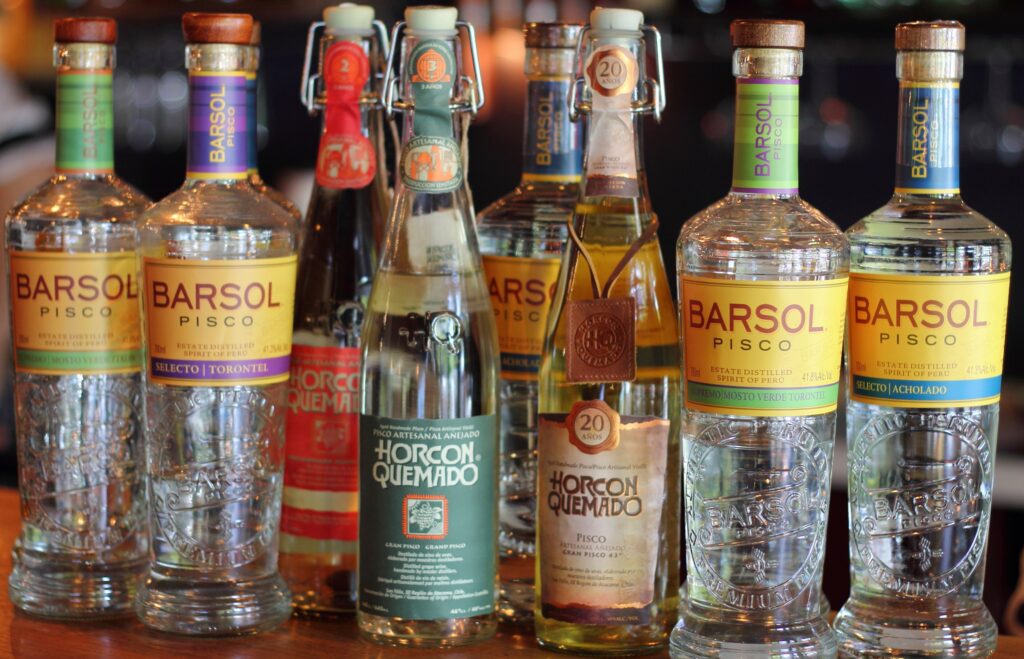
Parenthetically, there’s also Chilean pisco. This is a point of controversy. If I said that these two drinks were similar, I’d probably start a war. My understanding is that there are strong feelings over the relative strengths and relationships between these two beverages. Not wanting to start a small war, let’s just agree that for the purpose of this post, we are specifically talking about Peruvian pisco.
At this time, hundreds of ships sailed to San Francisco every year, coming around Cape Horn and often making stops in South American ports before continuing up the coast. Along this trade route was a town founded as Santa Maria Magdalena, a port in the Pisco valley of Peru.
When the Spanish first conquered South America, they brought wine with them. But it was expensive and in short supply, so in 1553, Marquis Francisco de Caravantes brought grapes from the Canary Islands and so began a profitable and highly successful wine production industry.
Aguardiente and pisco
So successful, in fact, that the Spanish government began to fear that South American wine production would undercut that same industry back in Spain. Thus the Spanish government started imposing limitations, even banning Peruvians from exporting wine. That ban was largely ignored, but some historians reckon it was this pressure which incentivized some South Americans to shift focus towards distillation, and from this was born the first aguardiente or “burning water.”
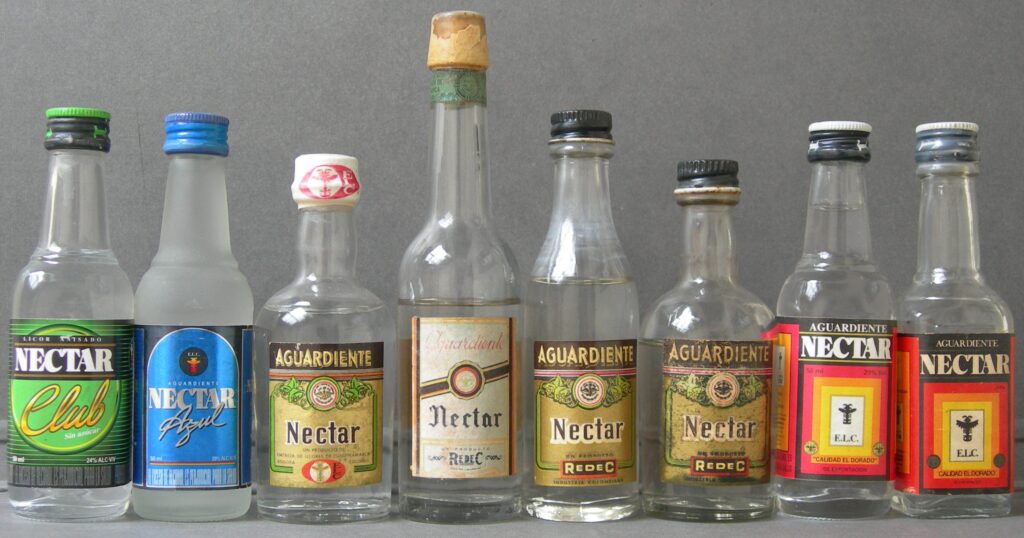
Aguardiente is a broad category of spirit made from distilled vegetable matter. Pisco is a type of aguardiente made from grapes — essentially a brandy — distilled in copper, and aged in nonreactive containers. In fact, one such container — a clay vessel called a “pisco” — may very well have given its name to the Pisco valley and thus to the spirit.
The creation of Pisco Punch
In the 1860s and 70s, San Francisco was a rough-and-tumble town. It was sometimes claimed to have more bars per capita than any other place in America.
At the corner of Montgomery and Washington Streets, where the TransAmerica tower now rises above a redwood park, stood the Bank Exchange Saloon, known for its expert bartenders and powerful elixirs. The Bank Exchange existed in several incarnations, some lasting only a few years, but by 1887 it was co-owned by George Brown and a man named Duncan Nicol.
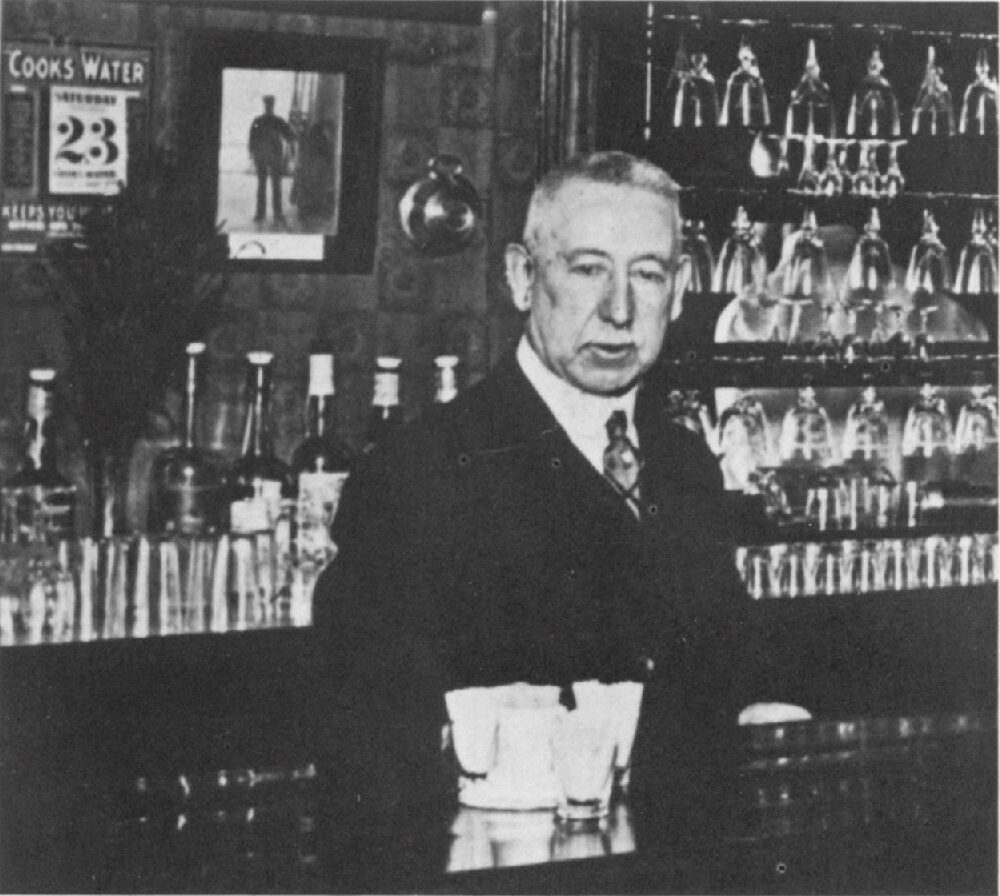
According to some — there’s controversy on this point — it was here that Duncan Nicol…or maybe George Brown and George Perkins — or perhaps John Torrence…or a bartender called “Professor” Jerry Burns…someone, anyway…brought together pisco with other imported ingredients like pineapple and lemons or limes, creating what became a spectacularly celebrated cocktail: the Pisco Punch.
The heyday of Pisco Punch
And this was no ordinary cocktail.
One anonymous source said of the punch that…
“…. it tastes like lemonade but comes back with the kick of a roped steer!”
Oliver Perry Stidger declared,
“It seems harmless, but in reality it is like the scimitar of Harroun with an edge so fine that after a slash, a man could walk on unaware that his head had been severed from his body until his knees gave way and he fell to the ground dead.”
So strong was this warhammer of a cocktail that patrons were supposedly limited to just two glasses per evening.
Pisco punch became the most sought-after drink in San Francisco, and some claimed that one could utter the words “Pisco Punch” in a London hotel and any number of voices would reply “Southeast corner of Montgomery and Washington Streets, San Francisco, America!”
Notable customers
Mark Twain is said to have frequented the Bank Exchange and consumed the famed punch, while listening to the stories of a man named Tom Sawyer.
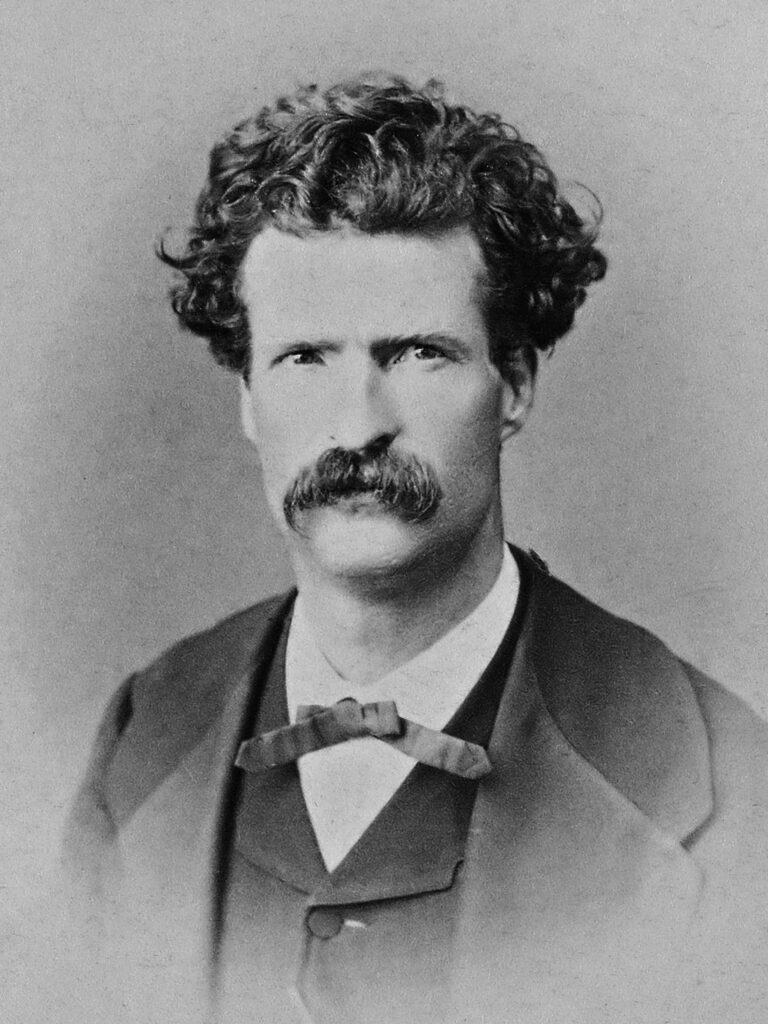
But it was Rudyard Kipling who best summed up the glory of pisco punch, writing in 1913:
“Go thither softly, treading on the tips of your toes, and ask him for a Button Punch. ‘Twill take ten minutes to brew, but the result is the highest and noblest product of the age. No man but one knows what is in it. I have a theory it is compounded of the shavings of cherubs’ wings, the glory of a tropical dawn, the red clouds of sunset, and fragments of lost epics by dead masters.”
And it’s this description that takes us down the road where things go from controversial to downright infuriating.
You see, so successful was this drink that Duncan Nicol, who owned and operated the Bank Exchange, wanted to keep his recipe from falling into the hands of competitors. Stories say those “ten minutes to brew” were because Nicol would actually descend to the basement so he could mix the drink in secret.
Thus the recipe remained under lock and key right up until the 1919 passage of the Volstead Act which brought about prohibition. When the Bank Exchange closed its doors, a reporter asked Nicol for the recipe to which the tight-lipped Scotsman replied, “Even Mr. Volstead can’t take the secret from me.”
A lost secret…or…?
Nicol died a few years later, and the recipe was lost forever.
Or so everyone thought.
In 1973, San Francisco historian William Bronson — while investigating the letters of San Francisco lawyer A. Crawford Greene — discovered what purports to be the Pisco Punch recipe as written by John Lannes, who appears to have been a manager at the Bank Exchange.
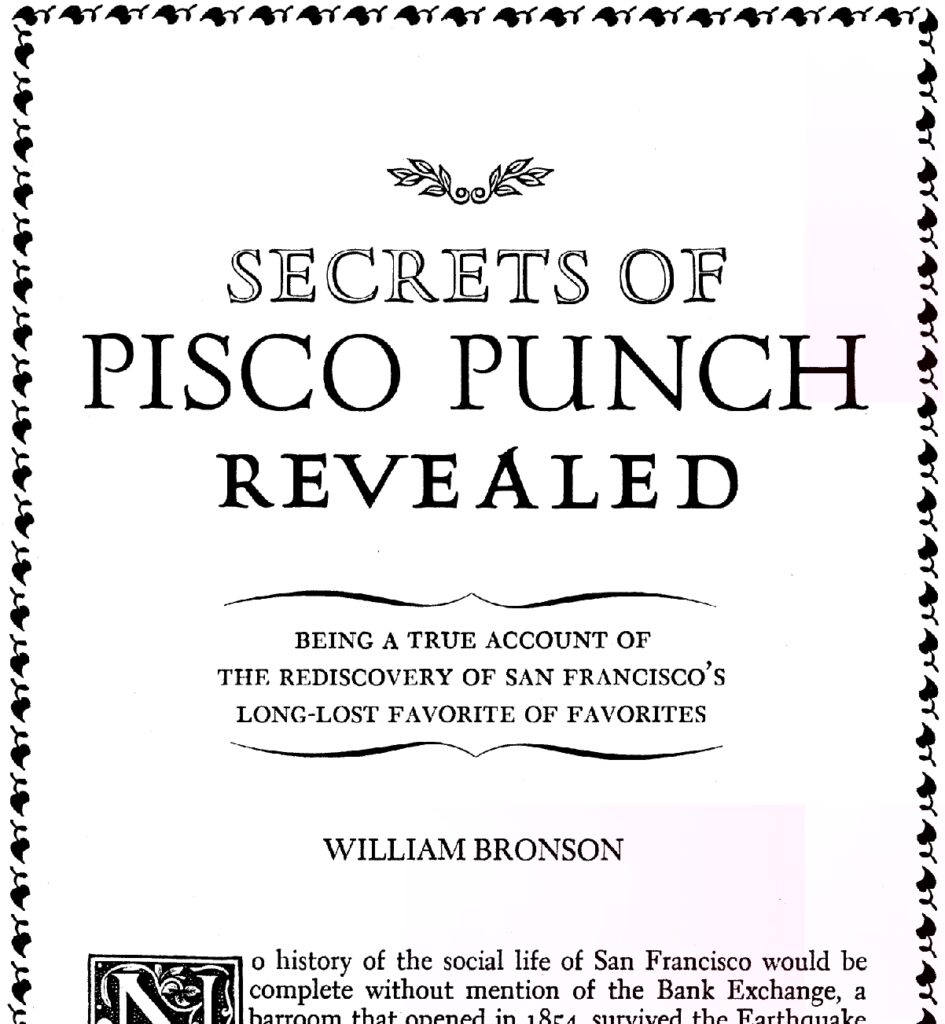
[In a fun personal twist, as I dug through this, I learned that early in her career, my mother had in fact worked with (and sort of knew) Mr. Greene.]
Lannes’ recipe — a slight variation of I’ll share near the end of this article — is made of pisco, pineapple, lemon, water and…what Bronson tells us is the secret ingredient…gum arabic syrup! His recipe contains…
- ½ pint (8 oz.) of pineapple-infused gum syrup
- 1 pint (l6 oz.) distilled water *
- ¾ pint (10 oz.) lemon juice
- 1 BOTTLE (24 on.) Peruvian pisco brandy
- Pineapple chunks
* I assume that the distilled water is to avoid odd flavors. In the video I use tap water because San Francisco’s Hetch Hetchy water supply is excellent. Your mileage may vary.
A hypothesized secret ingredient
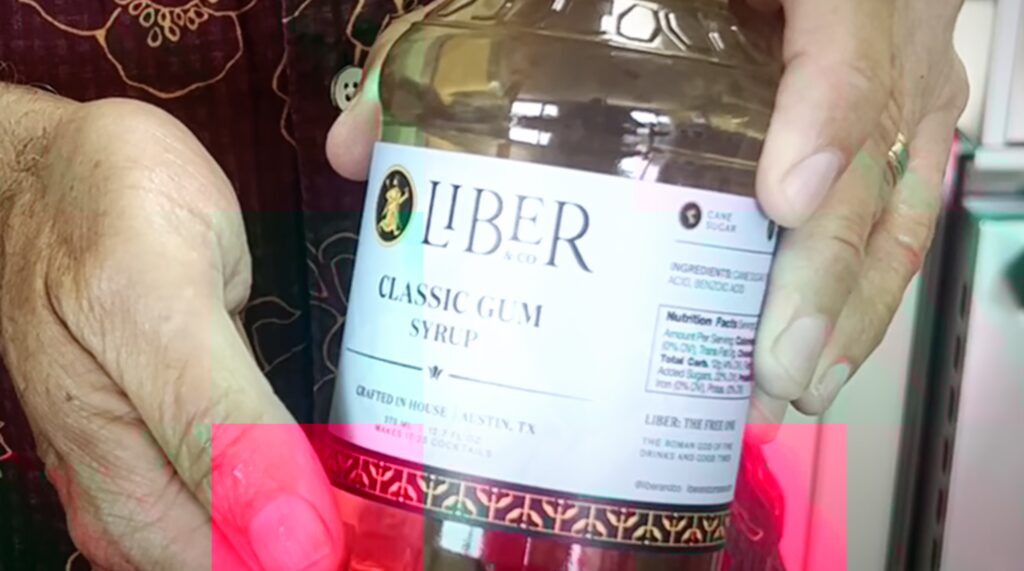
The most intriguing ingredient here is the gum syrup, which is basically sugar syrup into which gum arabic has been added. The gum arabic adds viscosity and Bronson claims that this was the secret ingredient.
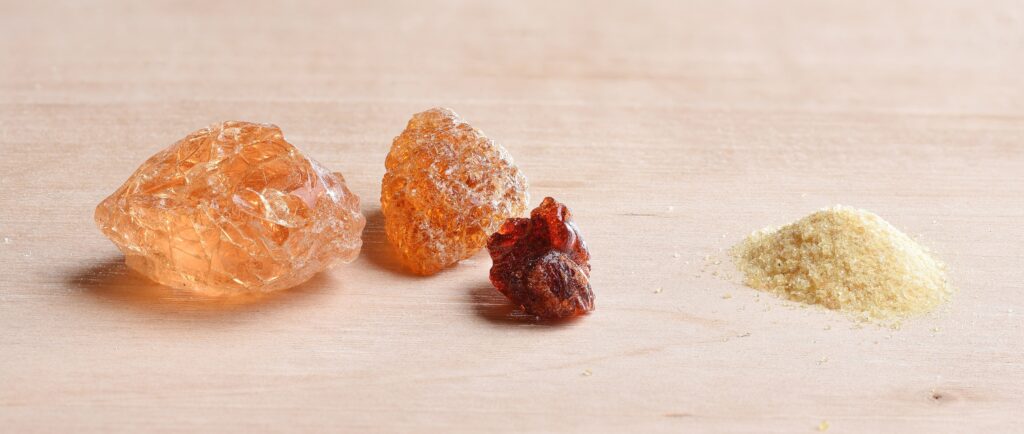
The idea being that the gum sheathes the alcohol, allowing it to go down smoothly and then kick you later as it breaks down.
But…
…Lannes’ ingredients don’t really match the descriptions we have for the original recipe.
Sure, pisco is strong…but no stronger than gin, or whisky, or rum…or many other strong spirits available in San Francisco at the time. And Lannes’ recipe uses almost as much water as pisco…so we’re talking watered-down pisco.
Why then would Pisco Punch have such a fearsome reputation?
And then there’s Kipling’s description:
“…the glory of a tropical dawn, the red clouds of sunset…”
Surely the drink must have had some kind of colorful hue to merit that description?
An even more startling suggestion
In 2007, pisco historian Guillermo Toro-Lira dug into these questions in Wings of Cherubs: the Saga of the Rediscovery of Pisco Punch, Old San Francisco’s Mystery Drink.
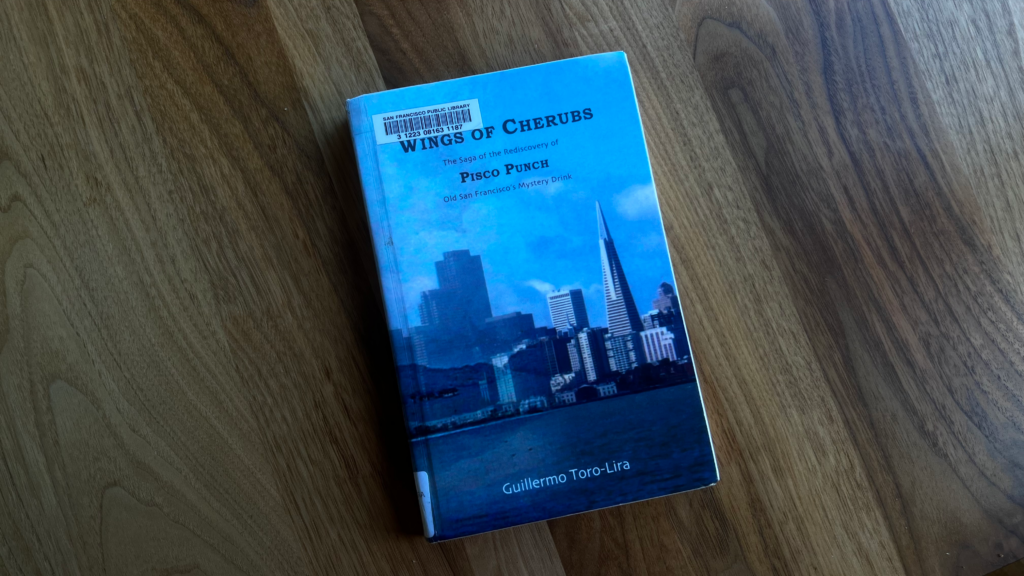
Toro-Lira’s writing style is…honestly…a tad odd.
But in it he does make a number of important points. Notably, that John Lannes only worked for the Bank Exchange for one year. Given the secretive nature of the recipe, he was unlikely to have had it. Toro-Lira also makes a good case that the punch was more likely made with limes, not lemons.
And he does give a recipe for pisco punch which he says he’s “rediscovered.” But in reading the book, it’s not clear to me what his basis is to claim his recipe’s authenticity.
And even then, he admits this recipe leaves out the elusive — and presumably all-important — secret ingredient.
But he does raise a fascinating — even startling — hypothesis.
The secret ingredient, Toro-Lira suggests, might have been a drink called Vin Mariani.
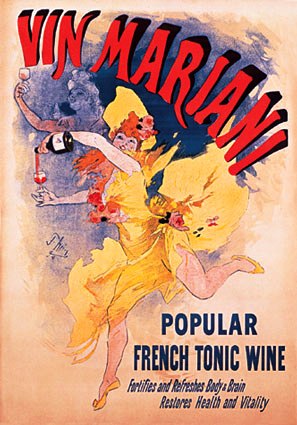
At the time Vin Mariani was a popular tonic, with Queen Victoria, Thomas Edison, and Ulysses S. Grant all said to have been enthusiastic consumers. Two popes endorsed it, with Pope Leo XIII even awarding its creator a Vatican Gold Medal.
And what exactly WAS Vin Mariani?
Well, that’s what makes this idea particularly startling. You see, it was a tonic made by infusing red wine…with coca leaves.
Yes…coca leaves. I.e., the secret ingredient, according to Toro-Lira, might have been cocaine!
Cocaine in the 19th century
This isn’t quite as shocking as it sounds to our tender 21st century ears. Cocaine-based drinks and tonics were pretty popular in the late 19th-century — the most famous example being Coca-Cola.
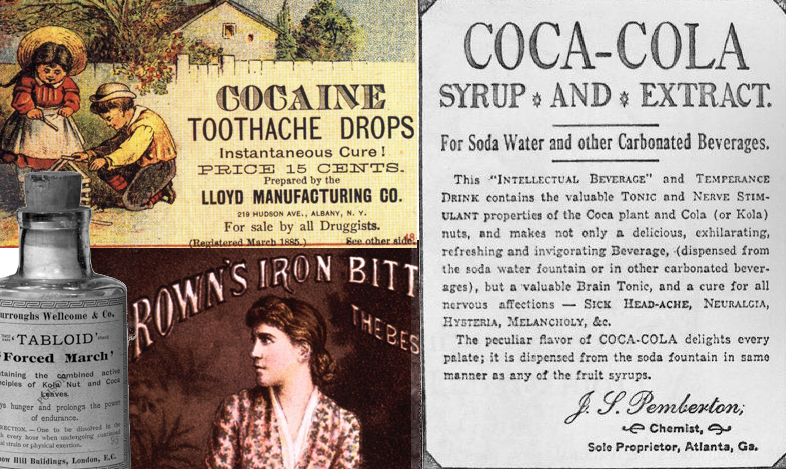
And cocaine-infused red wine might account both for the drink’s legendary kick and the red tinting suggested by Kipling’s description.
Oddly enough, drinks infused with cocaine have generally fallen out of fashion. At least…at the parties I get invited to.
So we might never know the exact fixings of this O.G. San Francisco potion, but that doesn’t mean we can’t have some fun taking a stab at it.
Trying a Pisco Punch
The easiest way to experience this pisco punch — at least if you live in San Francisco — might be to go to a bar where they serve one of its many variations. I decided to give one a whirl at the Comstock Saloon in North Beach. This classic bar has a long and storied history…
… including the fact that prize fighter Jack Dempsey used to work the door.
The good folks here mixed me up a punch of pisco, lemon, pineapple gum syrup and…secrets!
It’s a nice drink…much less pineapply than I’d imagined and very, very citrus-forward. It does lack Rudyard Kipling’s “red-clouds of sunset” tinting.
Making it myself
So I wanted to try to make this myself and see what I could do to recreate something like the pisco punch and maybe help you do the same. Below, I detail four variations.
And while for better or worse my creations will not be the cause of the Drug Enforcement Agency knocking on my door, I made an effort to add a little more “punch” and attempted to imbue the drink with some of that ruddy complexion, as suggested by Rudyard Kipling.
The Lannes version
Note that this recipe is scaled down from Lannes’ version. I’ve also cut down on the amount of water, relying on ice for dilution.
For both this version and the next, we’re going to prepare two ingredients the day before, both using a pineapple.
Cut up a pineapple, reserving the peel. Throw the peel into a pitcher of water (distilled if you distrust the flavor or safety of your local tap water). Cover the pineapple chunks with gum arabic syrup. Seal both containers and refrigerate for 24 hours.
Shake in a cocktail shaker:
- 2 shots pisco
- ¾ shot lemon juice
- ⅔ shot pineapple-infused gum arabic syrup
- ⅓ shot chicha de piña (pineapple water, see above)
- Ice
Strain into a glass and garnish with syrup-soaked pineapple cubes.
Toro-Lira “‘”revisited” version
Again, I’m reducing Toro-Lira’s water proportion and allowing dilution through ice.
Shake in a cocktail shaker:
- 2 shots chicha de piña (pineapple water, see above)
- 3 shots pisco
- 2 shots pineapple-infused gum syrup
- 1 shot lime
- Ice
Strain into a glass and garnish with syrup-soaked pineapple cubes.
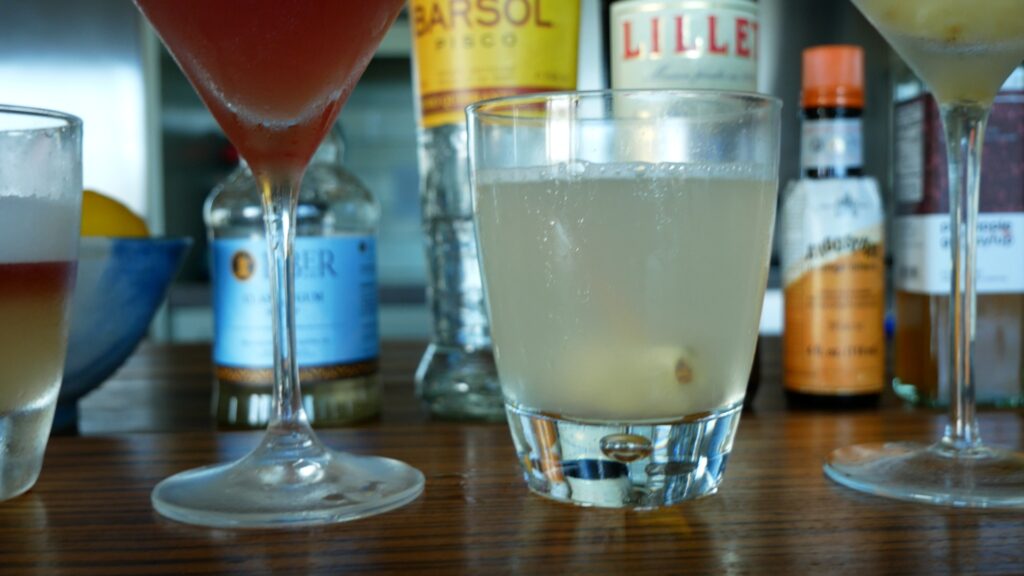
Duggan McDonnell’s version
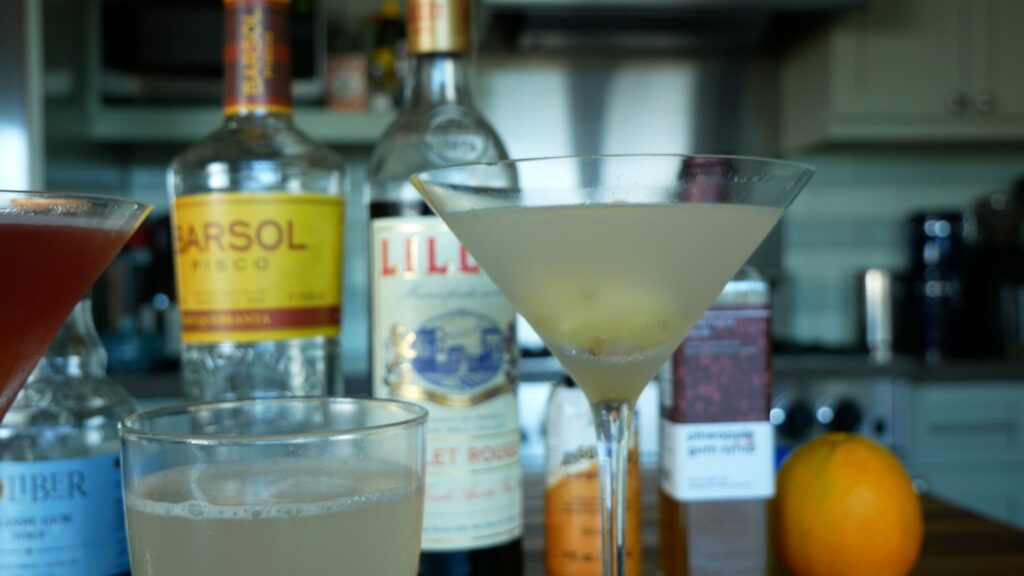
Duggan McDonnell created a version for the (sadly departed) Cantina bar in SF. His version, a much more balanced cocktail that the two previous, uses Lillet Rouge in place of Vin Mariani, which delivers a delightful red hue.
I’m also using a store-bought pineapple gum syrup from Small Hand Foods.
Shake in a cocktail shaker:
- 2 shots pisco
- 1 shot pineapple-infused gum syrup
- 1 shot of lime juice
- ½ shot Lillet Rouge
- 1 dash Angostura bitters
- Ice
Strain and garnish with an orange peel twist.
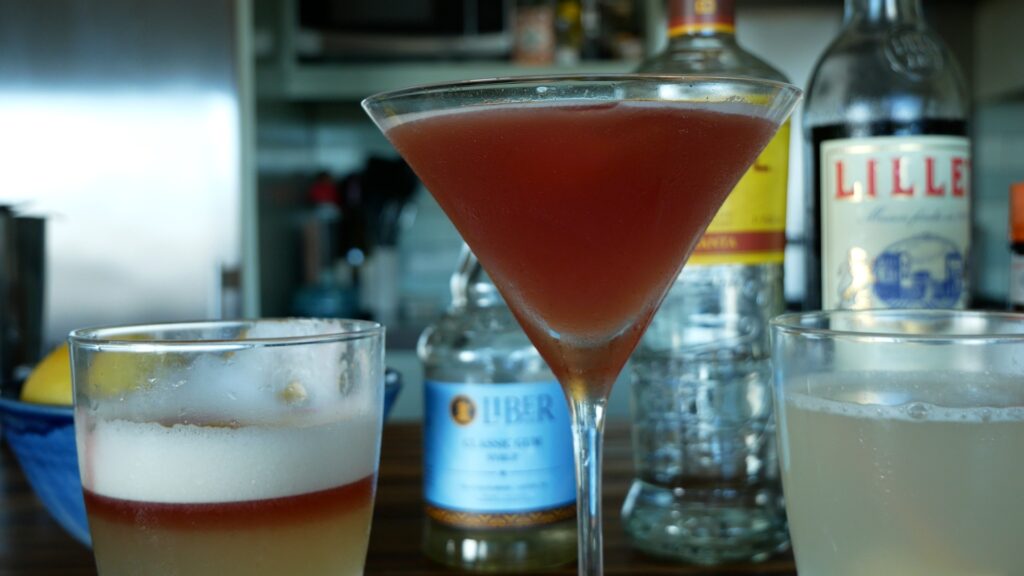
Red Clouds of Sunset
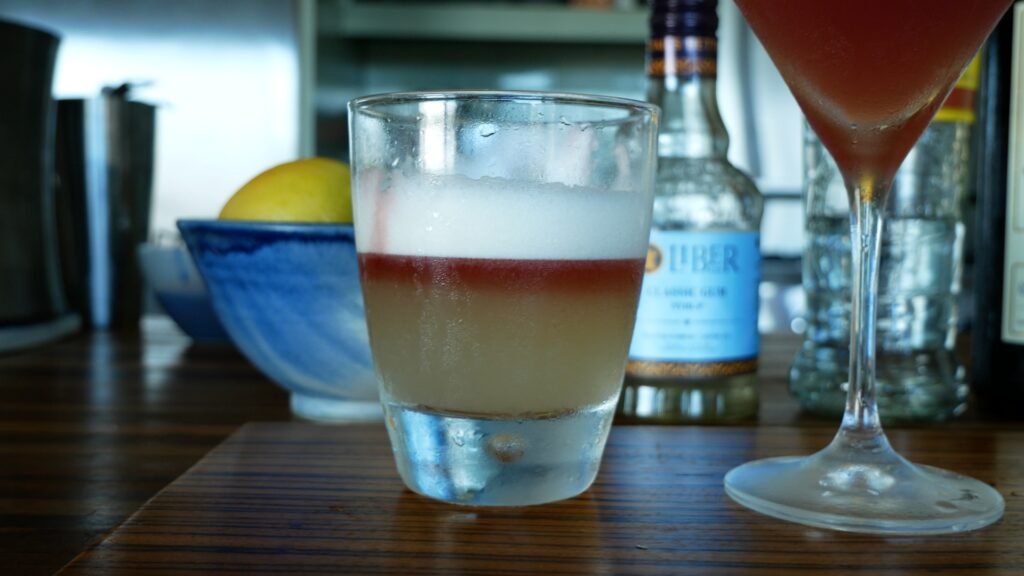
This is my own variation. It has no historical basis, but it’s both delicious and visually striking.
Leaning heavily on Duggan McDonnell’s recipe — and an element from another pisco classic, the pisco sour — I really wanted to draw on Rudyard Kipling’s invocation of “red clouds of sunset.”
In a cocktail shaker, dry shake (about 10-15 seconds):
- 1 egg white
Into the shaker, add the following and shake again:
- 2 shots pisco
- 1 shot pineapple-infused gum syrup
- 1 shot of lime juice
- 1 dash Angostura bitters
- Ice
Strain into a glass. Over the back of a spoon, pour in:
- ½ shot Lillet Rouge
Garnish with an orange peel twist.
I write about San Francisco, about writing, and about my upcoming fantasy novel.
If you enjoy what I do, please consider subscribing.
Sources
KQED: Pisco Punch: The Pricey San Francisco Cocktail that was a Gold Rush Knockout
California Historical Society: Secrets of Pisco Punch Revealed by William Bronson
From Sea to Sea: Letters of Travel by Rudyard Kipling
Wings of Cherubs: The Saga of the Rediscovery of Pisco Punch, Old San Francisco’s Mystery Drink by Guillermo Toro-Lira
Spirits & Distilling: Bank Exchange
The Pisco People: History of Pisco
Periodicals
Crocker-Langley San Francisco City Directory, 1920
Weekly Alta California: 8 February, 1849
Daily Pacific News, 23 December, 1850
Daily Pacific News, 1 January 1851
Leave a Reply