Exploring language for A Philosophy of Air
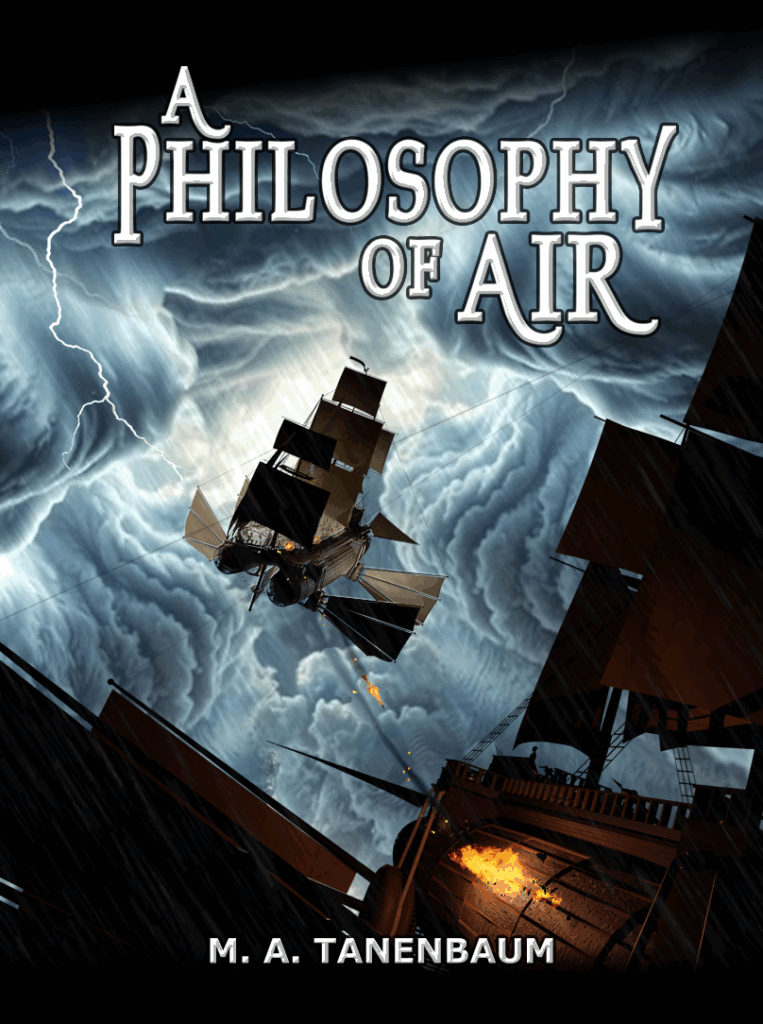
My name’s Marc and I’m writing a naturalistic fantasy novel called A Philosophy of Air. Picture Master and Commander or Pirates of the Caribbean meets Game of Thrones, all suspended a thousand feet above a sea of poison clouds.
In this series, I’m inviting you to come with me and learn all about the amazing, fantastical world of the Archipelago.
World of wordcraft
Today, I want to talk to you about words. I mean, I’m gonna use words, of course… I always use words…
…but today we’re gonna get down into the weeds regarding the lexicon I’ve crafted for A Philosophy of Air.
You see, this book has lots of vocabulary. I’m a true word nerd…I love the history of words and the connections between them. Some of you might even know that I used to run an etymology-based word game called Rootl.
Which is all to say that I love thinking about words and their complicated meanings. I’ve had a blast building out a vocabulary for A Philosophy of Air.
And you best believe that by the end of this post, I’ll provide a link to my work-in-progress glossary currently covering hundreds of terms (and growing) describing airships and the world around them.
I’m inviting you to become part of this project.
Sourcing words from history
I generally break this lexicon into two groups.
The first group are words I’ve acquired through research. This entire story is inspired by the Age of Sail and in particular the era of the Napoleonic Wars, so I’ve read a ton of source material.
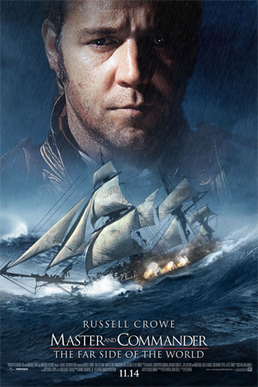
For example, the works of Patrick O’Brien. These include the Jack Aubrey/Stephen Maturin books, beginning with Master and Commander, which also inspired the Russell Crowe movie Master and Commander: Far Side of the World.
The works of C.S. Forester, who pretty much set the pattern for high seas adventure novels with his Horatio Hornblower stories.
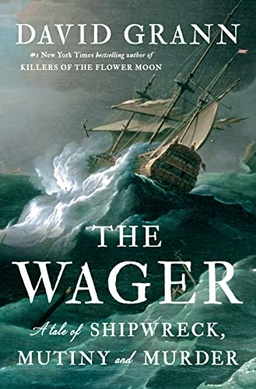
Beyond these mainstays, I’ve invested my time in a whole host of fiction and nonfiction sources, including Richard Henry Dana’s Two Years Before the Mast, Herman Melville’s White-Jacket and Redburn, William Richardson’s A Mariner of England, and of course books by Robert Louis Stevenson and R.M. Ballantyne. Additionally, I’ve delved into a lot of modern nonfiction, such as The Wager by David Grann and Longitude by Dava Sobel. I could go on, but you get the idea.
So much of this research goes to the fact that the world of ocean-going vessels has a deep and complex history, and every word is meaningful and important for understanding what you’re doing aboard ship. You don’t want to be in a gale against a lee shore, with your sails aback and shipping water and then confuse everyone by crying “helms-a-lee” when you meant to say “helms-a-weather!”
So a big chunk of the vocabulary in A Philosophy of Air is adopted/adapted from the world of the Age of Sail. Obvious words like sailor, mast, and spar, but also terms far less familiar to most like binnacle, fo’c’sle, futtock, t’gallant, press gang, and looby.
Etymology makes the fantasy novelist cry
Words don’t spring from nowhere.
There’s a reason behind every word we use. Sometimes it’s a dumb reason, but it’s there nonetheless. The word “English” itself derives from “of the Angles” referring to the Angle tribe of Germanic people who migrated from the European mainland to Great Britain. And it’s possible (though not certain) that “Angle” itself comes from the idea that the part of Jutland they hailed from looked like a fishing hook…i.e., perhaps “English” ultimately derives from the same root as “angler,” i.e., “fisherman.”

The origin of sailing terms
Let’s take another example more directly relevant to our story.
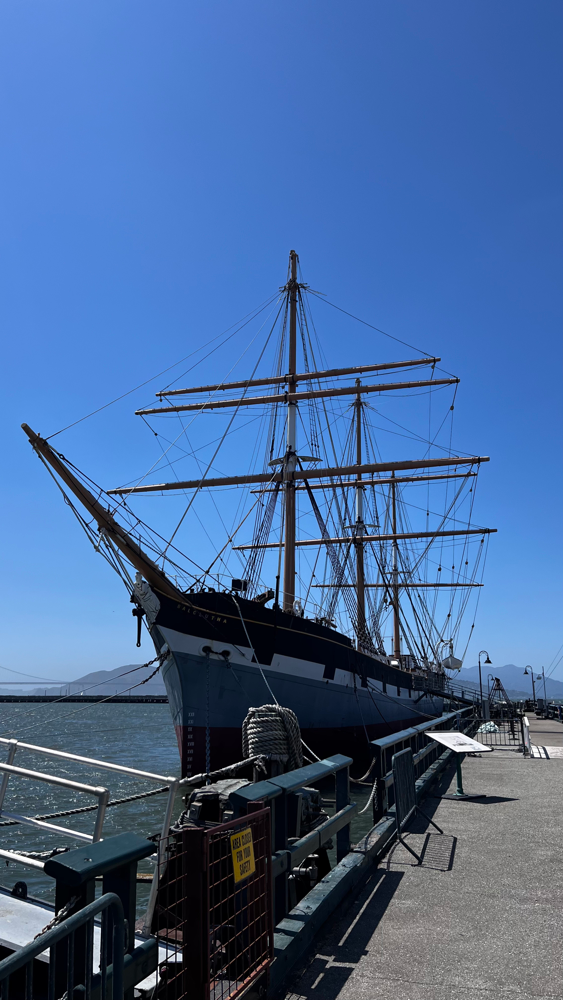
Even today, ships have a starboard side and a port side. These terms didn’t appear wholly formed when Odysseus — receiving a vision by the grace of Athena — awoke one morning and started using them. They extend, rather, from a pragmatic historic tradition: early German sailors propelled and steered their boats using a paddle on the righthand side which functioned both for propulsion and steering. From this we get Old English steorbord, literally “the steering board,” the side on which steering was done. Because this steering paddle occupied the righthand side, sailors reserved the lefthand side for “lading” or loading the ship. Thus, the opposite of starboard was “larboard”, or ladde-borde in Middle English: the ship’s loading “board.”
These terms worked fine, except when they didn’t. In the heat of battle, or in a storm, “starboard” and “larboard” were too easily confused, and so, beginning as early as the 16th century “larboard” began to give way to “port,” a synonym for the side on which lading may be done, but less likely to be misheard.
Asea in a world of words
Now, imagine these words in the context of a world where airships exist and sea-going vessels never did.
Paddles make no sense in this world. There wouldn’t be a starboard/steering side, right? There was never a steering side. Thus — etymologically — the terms “starboard,” “larboard,” and “port” make no sense in my world.
This is where I’ve decided that I have to make some concessions to my reader.
I could invent words to describe the left and right sides of my ships. That option feels unnecessarily punitive. A large number of readers either understand shipping terms or can intuit them from their native understanding of English. For example, a “halyard” is simply a line used to “haul a yard,” i.e., raise or lower the particular ship’s spar known as a yard. A “yardarm” is one end of that same spar.
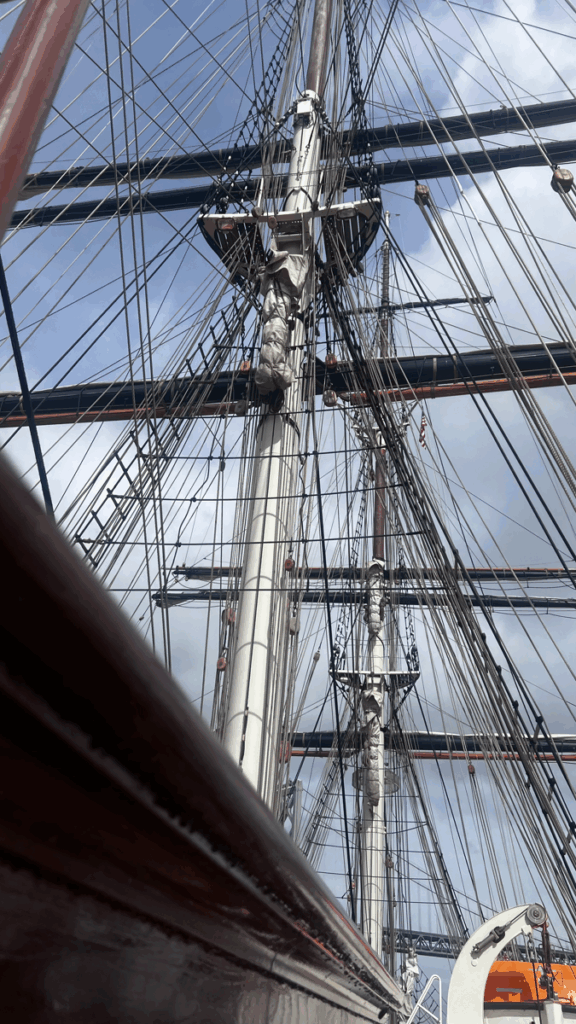
So using historically accurate words where possible opens a door to my readers.
Let’s not forget that A Philosophy of Air is meant, most of all, to be a fun read.
At the opposite extreme, I could just say “left” and “right.” Everybody understands those terms. But dumbing down the language ignores the reality that sailing in a ship is a highly technical affair, replete with its own specialized terminology. “Left” and “right” feel flat. Readers understand that we’re aboard ship, and they deserve immersion in an entertaining world.
Thus I’ve chosen to steer a middle course: I’ve utilized historically accurate terms as and when I can, leveraging our historical sense of what it means to be at sea, and though it sometimes pains me to do so, I’ve turned a blind eye to a lot of the etymological reality.
Where history runs out
Leveraging historical terminology involves a lot of complicated language. And to be honest, I could have stopped there. Stick with all that classical sailor’s jargon. That’s enough to crowd into the reader’s brain, right?!
But it’s not enough. At least not if you’re dumb enough — like this guy — to write a fantasy story on a world where people fly in freakin’ airships. Because that adds extra directions, inventions and languages.
Which brings me to my second grouping: words invented to handle the fantasy.
Words like sack and pallone, which describe fixtures keeping my ships aloft. Names of new sails that you need while flying like keels’ls, wings’ls, and catchs’ls. You can’t rate your airspeed by tossing a log overboard like they did on a ship, so I came up with something called a kite and fettle to do the same thing. I had to name countries, musical instruments, foods, religions, and currencies. Even superstitions (though many of these I borrowed from research).
It’s here, in creating new words, that I get to practice my etymological powers. (Thank God.) All the terms I’ve just listed — almost every word “invented” for the story — I derive by bending existing words or their historical antecedents to my will.
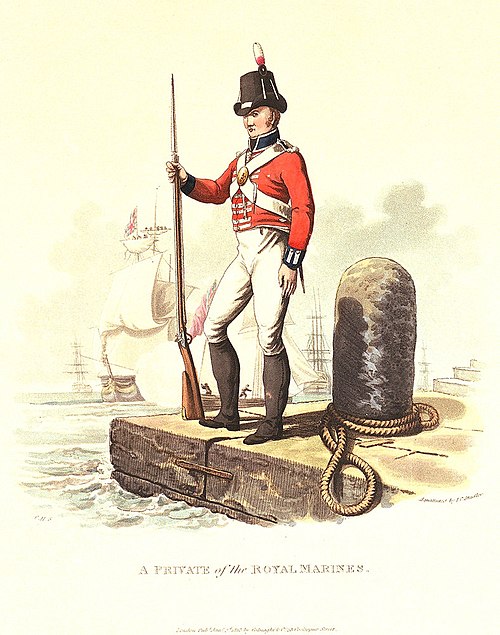
Think about this: in Horatio Hornblower’s day, ships carried a group of soldiers called “marines.” The word literally means “of the sea.” Notwithstanding my earlier reflections on port vs. starboard, it just stretches too far beyond my novel’s world to call these men marines.
So I reached into my etymological bag of tricks and found the word guerrier for the purpose, French for “warrior.” My wife further noted that the term is used in Dublin, Ireland as a slangy synonym for “hooligan,” which suits my purposes as well.
A note on conlangs
Now, there’s actually one last group of words I’ve not listed, and that’s because I’ve not actually gone down this road yet.
I’ve lately been reading and learning a bit about conlangs (constructed languages). For the uninitiated, conlangs are languages created intentionally, as opposed to those (like English) which emerge organically through habitual use. Well-known examples of conlangs include Esperanto, Klingon, and Dothraki.

The world of Philosophy has many languages, including Petran, Arbal’yan, Dawnish, Pykish, and others. Any of these could have potential for construction.
But the most interesting to me as a potential for conlanging would be Airtongue, used by airmen as a “lingua franca” to communicate on their voyages. Derived mostly from simplified Dawnish, it also contains bits of Pykish, Theran, and Petran. Part of me thinks it would be fun to play in this space.
To be clear, if I do decide to explore construction, it will rest on two fundamental pillars. First, the language construction must meaningfully add to (and certainly not detract from) the story.
Second, it must not take me meaningfully off task, i.e., I have neither the experience nor the desire to invent a full-blown conlang. At most, I might construct a handful of phrases with resonance for my story.
A glossary of air
All of this is simply intended to give you a little insight into the work necessary to build out the language for this story. And as a reward for persevering this far…
…is a link to the glossary. I’ve opened it up for your comments. All well-intentioned feedback is welcome. If you know about the Age of Sail and see something egregiously incorrect, help me make it better. If you think there’s something that should be in there, tell me about it!
Remember, whether I use your idea or not will largely depend on the needs of the story. At the end of the day, all of this has to be about writing the best novel I can, telling the best story I can…and as much as I LOVE learning about or creating new words, I need to keep that impulse in check enough that readers can ultimately pick this novel up and enjoy it.
I’ll be back next week with another entry. Thanks for reading, my friends.
I write about various things that interest me. A lot of that is about writing, about the city of San Francisco, and about my work-in-progress novel, of course.
Please consider subscribing. You can also follow me on Substack.
Leave a Reply